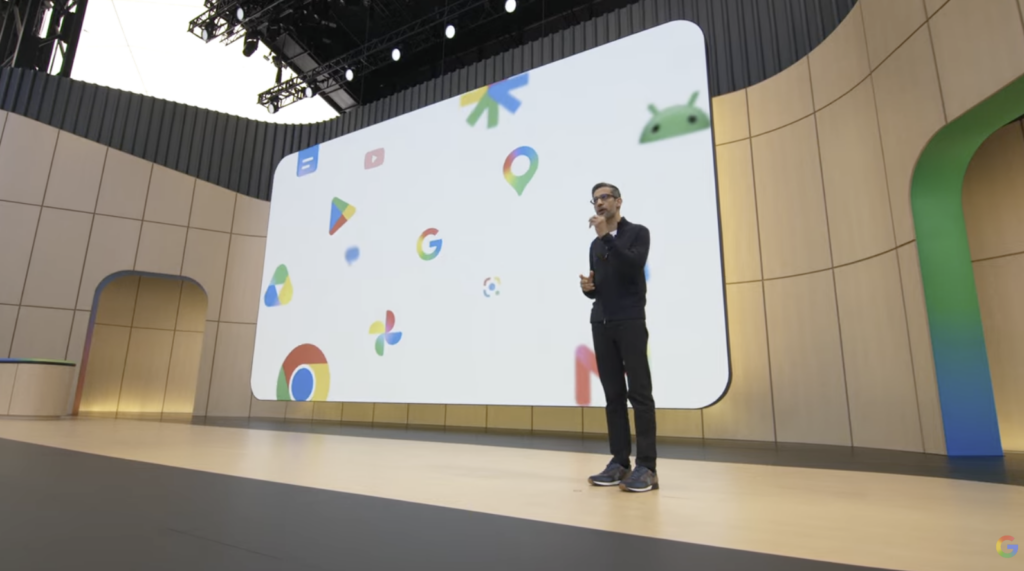
Google’s next developer stage may reveal how deeply Gemini has been woven into its product strategy. At Google I/O 2026, the company is expected to show how far it wants to push an AI-first ecosystem across Android, Search, Chrome, Workspace, and smart devices.
The event is set to begin on 19 May at Shoreline Amphitheatre in Mountain View, California, with CEO Sundar Pichai scheduled to deliver the keynote. Google also plans to stream the conference globally through its official I/O website and the company’s YouTube channel.
Gemini moves from feature to foundation
The biggest attention around I/O 2026 is centered on Gemini AI and its expanding role inside Google’s products. Over the past year, Google has already placed Gemini into Gmail, Search, Android, and Workspace, but this stage is expected to show a deeper level of integration.
That shift matters because Google is no longer presenting AI as an added layer. Instead, the company appears to be moving Gemini toward the center of everyday use across its ecosystem.
Android 17 as a more adaptive platform
One of the most closely watched areas is Android 17, which is expected to reflect the next phase of Gemini Intelligence. Reports suggest Android is moving beyond the traditional operating system model and toward a more context-aware platform.
The direction points to automation features, widget creation, voice interaction handling, and proactive help across apps. If those elements appear at I/O 2026, Android 17 will look less like a routine update and more like part of Google’s broader AI transition.
Personalization, multitasking, and new Android-facing tools
Android 17 is also expected to emphasize personalization and multitasking. Earlier previews and leaks have pointed to redesigned widgets, improved voice input, new digital wellbeing tools, and updates for Android Auto.
Taken together, those details suggest that Google wants Android to feel more responsive to daily behavior. The operating system would not only support tasks, but also help anticipate them.
A broader hardware and platform push
Beyond phones, Google may also use I/O 2026 to outline a new direction for laptops. Reports say the company could introduce “Googlebook,” a new AI-first laptop platform designed to eventually replace Chromebook.
That device concept is said to blend Android and ChromeOS while embedding Gemini more deeply into the user experience. Such a move would signal that Google’s AI strategy is extending beyond software and into the shape of its future computing devices.
Google may also present progress on Android XR, its augmented and mixed reality platform. With smart glasses and AI wearables drawing more industry attention, any update on Android XR would offer a clearer view of how Google sees the next wave of personal computing.
Why this event matters now
The timing of I/O 2026 also reflects the pressure Google faces from the wider AI race. OpenAI, Microsoft, Apple, and Meta are all competing to define how consumers will interact with AI systems, and Google is now under pressure to move quickly while also building trust.
That trust question is especially important after scrutiny over AI-powered search summaries, misinformation risks, and the possible impact on publishers and the wider web ecosystem. For Google, this conference is not only about launching new features, but also about proving that Gemini can serve as the base of its future products.
If the expected announcements arrive as scheduled, 19 May could mark a major step toward a Google ecosystem shaped around Gemini, from Android and Search to Workspace, XR, and possibly new hardware categories.