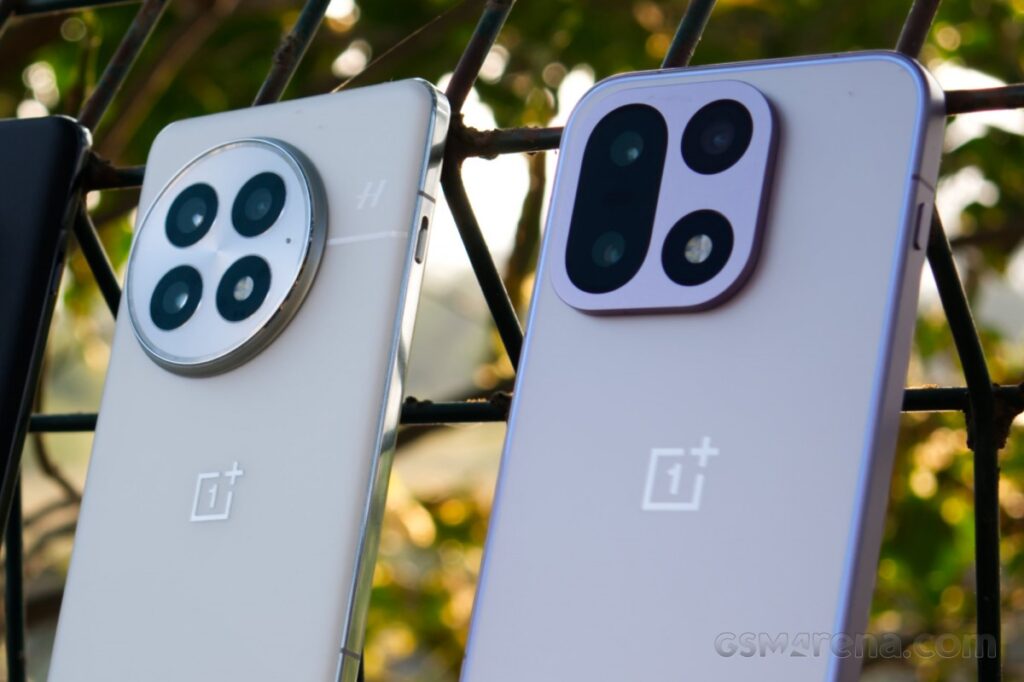
The latest price change has made the OnePlus 15R harder to justify for many buyers, even though it still looks stronger on paper in several key areas. With the gap now narrowing, the OnePlus 13S stands out as the more balanced option for everyday use.
What used to feel like a straightforward upgrade path is now more complicated. The decision is no longer only about choosing the newer model, because the closer pricing forces buyers to weigh design, camera hardware, display features, performance, and long-term practicality much more carefully.
Pricing has shifted the comparison
The OnePlus 15R now starts at 54.999 rupee India for the 256GB version and 59.999 rupee India for the 512GB version. The OnePlus 13S sits slightly lower at 52.999 rupee India for 256GB and 57.999 rupee India for 512GB.
That matters because the OnePlus 15R was initially positioned as the more affordable choice when it launched in December 2025. After a 7.000 rupee India increase, its value argument is much less convincing, especially since the OnePlus 13S now costs less while covering many of the needs that matter most in daily use.
Two phones, two different priorities
The OnePlus 15R is the larger and tougher device, weighing 219 grams and carrying IP68 and IP69K ratings for water and dust resistance. That combination makes it a better fit for users who care about durability or who often use their phone in harsher environments.
The OnePlus 13S takes a different route with a glass and aluminum build that weighs 185 grams. Its more compact size makes it easier to hold with one hand and simpler to carry around during everyday movement.
Display choices favor different users
The OnePlus 15R uses a 6.83-inch AMOLED display with a 165Hz refresh rate. For users who want the fastest-feeling screen and smoother motion in gaming, that specification is one of its biggest strengths.
The OnePlus 13S comes with a 6.32-inch LTPO AMOLED panel running at 120Hz. Even with the lower refresh rate, it adds Crystal Shield Glass and Dolby Vision support, which makes it feel more premium for media consumption and general viewing.
Performance is close, but the newer chip helps the 15R
Inside, the OnePlus 15R uses the Snapdragon 8 Gen 5, while the OnePlus 13S is powered by the Snapdragon 8 Elite. Both models come with 12GB of RAM and 256GB or 512GB storage options.
The newer chipset gives the OnePlus 15R a slight edge in heavier workloads such as demanding gaming and sustained rendering. For normal activities like browsing, social media, and multitasking, the difference is expected to be minimal.
Both phones run OxygenOS 16. The OnePlus 15R should also benefit from a longer update window because it is the newer device in the lineup.
Battery capacity pushes the 15R ahead
One of the clearest advantages for the OnePlus 15R is its 7.400 mAh battery. The OnePlus 13S uses a smaller 5.850 mAh cell, and both devices support 80W wired charging.
The 15R also uses UFS 4.1 storage, while the 13S is built on UFS 4.0. Together with the larger battery, that gives the 15R a stronger case for long sessions and faster app launches.
Camera hardware gives the 13S the cleaner advantage
The camera setup is where the OnePlus 13S becomes more persuasive. It pairs a 50MP main camera with a 50MP telephoto lens offering 2x optical zoom.
By contrast, the OnePlus 15R uses a 50MP main camera alongside an 8MP ultrawide. That gives the 13S more flexibility for portraits and zoom shots, while the 15R relies on a more basic secondary camera setup.
On the front, both phones use a 32MP selfie camera. The OnePlus 15R adds OIS to the front camera, which can help keep selfies steadier when hands are not perfectly still.
The stronger value case now belongs to the 13S
The OnePlus 15R still makes sense for buyers who want the biggest battery, the fastest display, and a more rugged body. It is also the better fit for users focused on heavy gaming and maximum endurance.
But with the price now higher, the OnePlus 13S becomes easier to defend for most people. It is lighter, more compact, better equipped for photography, and cheaper, which makes it the more rational choice for everyday use.
Source: tech.sportskeeda.com