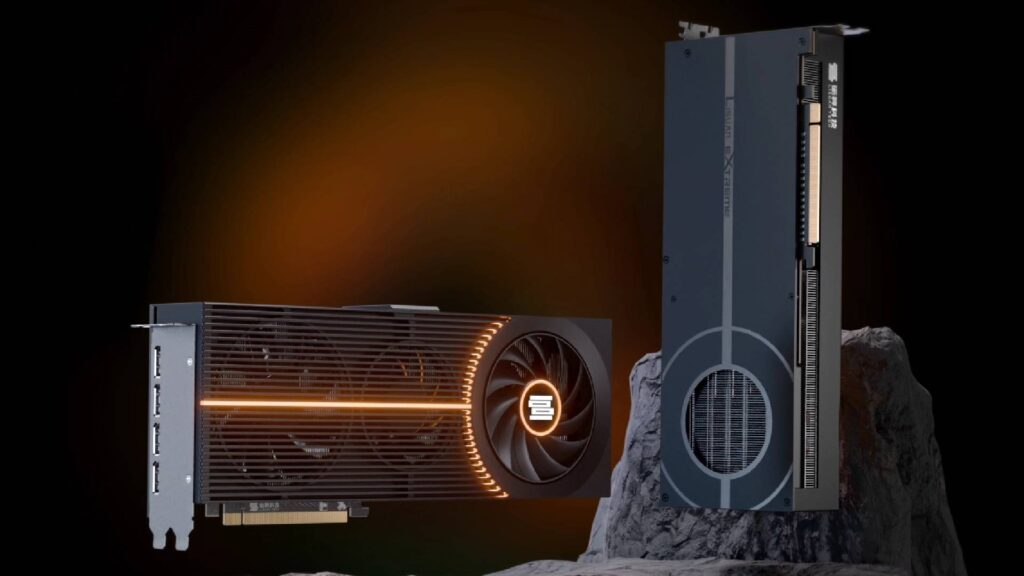
Lisuan Technology’s LX 7G100 is shaping up as a notable step forward for China’s GPU gaming efforts, but its market position is still difficult to defend. The retail version carries 12GB of memory and can run modern games, yet its asking price of 3,300 Yuan, or about USD 480, puts it in uncomfortable territory for buyers.
That price places the card close to the Nvidia RTX 5060 Ti, while its performance remains much nearer to the RTX 3060. For gamers weighing value first, that gap makes the LX 7G100 feel neither cheap enough to be an entry-level gamble nor fast enough to justify a premium.
Performance that trails the price tag
The clearest issue is the mismatch between what the card costs and what it delivers. In synthetic testing through 3DMark, the LX 7G100 lands around the RTX 3060 level or slightly above it.
That result is still a major improvement over the early sample, which was reportedly only on par with the GTX 660 Ti. Even so, the current performance is not enough to match the class of card its price suggests.
Game results show a wider gap
In actual games, the limitations become more obvious. In Cyberpunk 2077 at 1080p with FSR3 Quality, the LX 7G100 reached an average of 88 fps, far behind the RTX 4060 at 232 fps and the Intel Arc B580 at 243 fps.
The same pattern appears in other titles. In Black Myth: Wukong, the card managed 56 fps, while Forza Horizon 5 dropped to 48 fps even after settings were reduced to Low.
Modern specifications, but not a complete package
On paper, the LX 7G100 does not look outdated. It comes with 12GB GDDR6 memory, four DisplayPort 1.4a outputs, and support for image output up to HDR 8K 60Hz.
Lisuan also lists a broad set of API support. The GPU is compatible with DirectX 12, Vulkan 1.3, OpenGL 4.6, and OpenCL 3.0, which gives it a reasonable technical foundation for modern games and applications.
Software progress is visible, but not enough
One positive point is that the card appears more mature than earlier Chinese GPU attempts. Many modern games reportedly launch and run without frequent crashes, which has long been a major obstacle for new graphics hardware with immature software ecosystems.
That matters because Lisuan built the architecture, driver stack, and software from scratch. Compared with previous efforts such as Moore Threads’ MTT S80, which needed a long sequence of driver updates before becoming more usable for gaming, the LX 7G100’s debut looks more stable.
Important features are still missing
The software side still leaves plenty of room for improvement. The driver panel is described as very basic, overclocking stability is not consistent, and system monitoring features remain limited.
The biggest omission is hardware ray tracing support. Lisuan says the feature will only arrive on its second-generation GPU, leaving the LX 7G100 without one of the most common features in the modern midrange segment.
That leaves the card in an awkward position. It shows that China’s local semiconductor industry can now produce a gaming GPU that actually runs modern titles, but the value proposition is still weak for consumers.
Based on the Founder Edition review on BiliBili, the LX 7G100 looks more like an important milestone for China’s GPU industry than a practical choice for gamers today. Its progress is real, but a price near RTX 5060 Ti levels with performance closer to the RTX 3060 makes its path in the wider market hard to clear.
Source: inet.detik.com