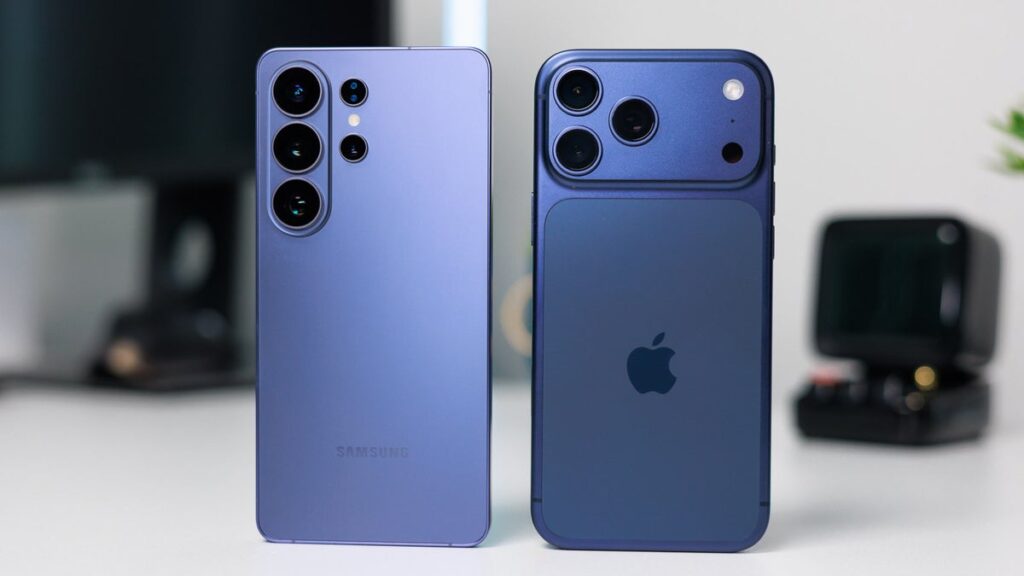
For many buyers weighing a flagship upgrade, the real decision in 2026 may come down to a single priority: how a phone fits into daily work and content creation. Samsung Galaxy S26 Ultra and iPhone 17 Pro Max both push hard on design, camera quality, performance, and AI, but they do so with different strengths that matter more in practice than on a spec sheet.
That is why the comparison is no longer just about which phone is more advanced. It is about which one matches a user’s routine better, especially when the budget reaches the high end and even small differences in feel, workflow, and ecosystem can shape the final choice.
Two flagships, two different philosophies
Samsung Galaxy S26 Ultra keeps the brand’s familiar sharp and professional look. Its body uses a new-generation titanium material that is made to feel sturdier and more resistant to scratches.
iPhone 17 Pro Max takes a different route with a thinner and lighter body than the previous series. That design choice is meant to improve comfort during long use, especially for people who rely on their phone throughout the day for work.
The difference is easy to notice in hand. Samsung delivers a more solid and masculine impression, while Apple focuses on portability and hand comfort.
Display quality matters, but not in the same way
Both phones use premium screens, but the priorities are different. Samsung continues with Dynamic AMOLED 2X and very high brightness, plus a new anti-reflection layer that helps reduce glare in bright outdoor conditions.
Apple refines Super Retina XDR with more precise color accuracy. A smaller Dynamic Island also makes the screen area feel larger and more modern.
That split matters for different types of users. Samsung is stronger for outdoor viewing, while iPhone is more appealing for photo and video editing tasks that depend on accurate color.
Camera strengths point in different directions
Samsung Galaxy S26 Ultra still relies on a 200 MP main camera, now paired with the latest generative AI technology. The result is described as extremely sharp, including when images are zoomed in heavily, and long-distance zoom is designed to stay more stable for concerts, sports, and outdoor shots.
Samsung also adds more flexible image processing through instant AI-based automatic editing without extra apps. That makes the phone a strong fit for users who create social media content and want fast results.
iPhone 17 Pro Max follows a different camera strategy by focusing on video consistency. Apple has aligned the performance of the three rear cameras so switching between lenses while recording feels smoother and more professional.
The 24 MP front camera is another important upgrade for vlogs and high-quality video calls. For many creators, that alone can be a decisive advantage.
Performance is strong on both sides
On paper, both devices sit at a very high level for daily use. Galaxy S26 Ultra uses Snapdragon 8 Gen 5, while iPhone 17 Pro Max runs on Apple A19 Pro, which is known for better power efficiency.
Samsung enhances the experience with Galaxy AI, which leans toward productivity. Instant translation and automatic photo editing are useful for users who move between tasks often.
Apple answers with Apple Intelligence, which stands out for privacy and a Siri experience that feels more natural. For people already used to Apple’s workflow, that approach remains highly practical.
The final choice depends on how the phone will be used
Samsung Galaxy S26 Ultra is the more suitable option for users who want an all-round device. S-Pen support, Samsung DeX, a more open Android environment, and flexible photography make it strong for work and multitasking.
iPhone 17 Pro Max fits better for users already inside Apple’s ecosystem. Integration with MacBook, iPad, and AirDrop creates a smoother workflow, while its consistent video quality keeps it attractive for professional creators.
Resale value also remains part of the appeal for iPhone buyers. Many users still see Apple devices as premium gadgets with relatively stable resale value, in addition to serving as a work and entertainment tool.
Source: pemmzchannel.com