Xiaomi Redmi Note 15 Pro 5G stands out less for one single headline feature than for the way it bundles several strong ones into a midrange package. A 200MP main camera, a 6,580mAh battery, a large AMOLED display, and a starting price of around £349 place it firmly in the attention zone for buyers who want a lot of hardware for the money.
That appeal, however, is tempered by one major drawback that affects daily use more than the specifications suggest. HyperOS, despite the phone’s strong hardware, is crowded with preinstalled apps and advertising that can quickly wear down the experience.
Display and everyday performance
The first part of the phone that feels genuinely premium is the screen. Xiaomi gives the Redmi Note 15 Pro 5G a 6.83-inch AMOLED panel with a resolution of 2772 x 1280 pixels, and it makes a strong case for video streaming and general media use.
Colors look bright and lively on YouTube and Netflix, while HDR10+ and Dolby Vision add extra depth to supported content. The 120Hz refresh rate also keeps scrolling, browsing, and gaming feeling smooth, and the 3,200-nit peak brightness helps when the phone is used outdoors.
Under the hood, the MediaTek Dimensity 7400-Ultra keeps the phone steady during normal multitasking. Switching between social apps, video playback, and other daily tasks feels comfortable, and even demanding games can run well enough for the class.
There are still limits. Genshin Impact can bring occasional frame rate drops, but the overall performance remains solid rather than frustrating.
Memory, sound, and practical hardware
The tested configuration includes 12GB of RAM and 512GB of internal storage, which gives the phone plenty of room for apps, photos, videos, and other files. That amount of storage is especially useful for users who do not want to manage space constantly.
Audio is less impressive than the screen or battery. The stereo speakers are acceptable, but at higher volumes the sound can feel somewhat thin.
Camera focus shifts to detail, not zoom ambition
The 200MP main camera is one of the most convincing parts of the package. It produces images with high detail and natural-looking color, without pushing processing so hard that the results look artificial.
Landscape shots in particular benefit from this balance, with trees, skies, and other outdoor scenes showing vivid color while keeping a realistic appearance. The overall quality is competitive for a midrange phone, even if it does not reach the level of premium devices such as the iPhone 17 Pro Max or Google Pixel 10 Plus.
The absence of a dedicated telephoto lens is the main compromise. Zoom from 2x to 4x remains fairly sharp, but quality starts to fall once the magnification goes beyond that range.
On the front, the phone includes a 20MP selfie camera. It is suitable for video calls and social media content, while video recording supports 4K at 30fps and 1080p at 60fps with stable results.
Big battery, moderate charging, and a less polished finish
Battery life is another major strength. The 6,580mAh capacity is a clear jump over the previous generation’s 5,110mAh unit, and it easily lasts through a full day of normal use.
Even with gaming, video calls, and streaming in the mix, endurance remains strong. The trade-off is charging, which relies on 45W fast charging and does not include wireless charging.
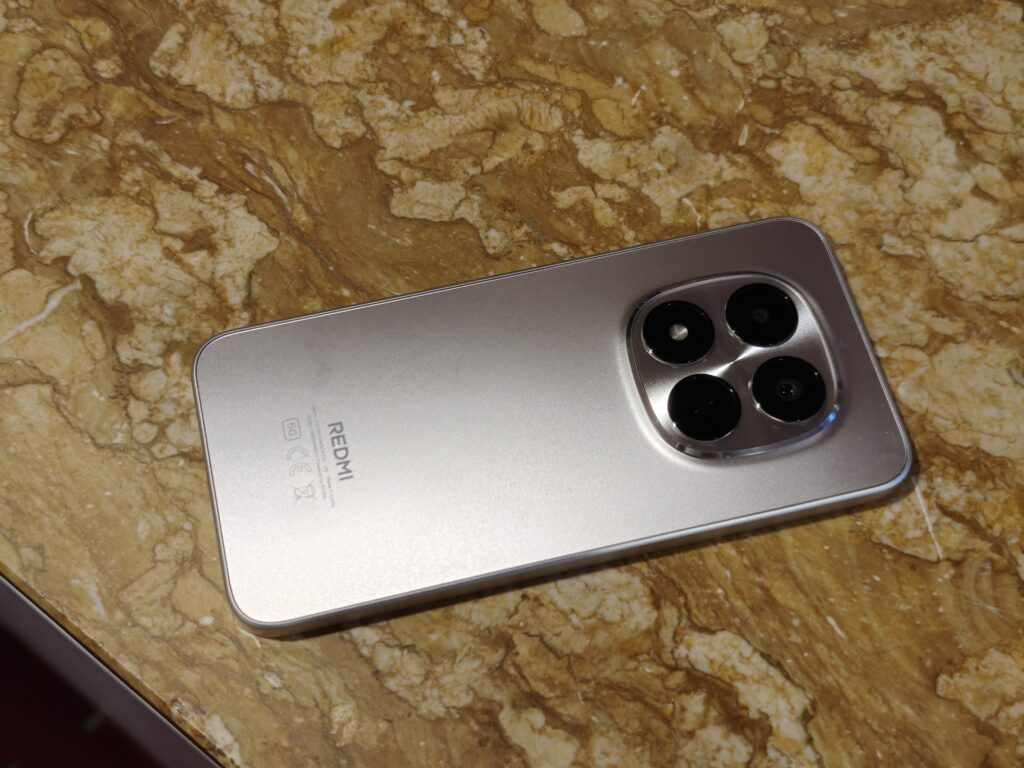
Design is more functional than premium. The large camera module at the center of the back panel is visually prominent, the available color options are not especially striking, and the rear finish can feel slightly cheap compared with some rivals.
Still, the phone does include IP68 protection, which means it is resistant to dust and can survive water exposure at a depth of around 1.5 meters for up to 30 minutes.
Software remains the biggest problem
The main weakness is not hardware at all, but software. Redmi Note 15 Pro 5G runs HyperOS 2 based on Android 15, and Xiaomi says it will receive four years of OS updates and six years of security updates.
In daily use, though, the software experience is cluttered. The built-in browser shows ads and pop-ups, while the phone comes with a large amount of preinstalled bloatware, including shopping and game apps.
Promotional notifications from Xiaomi’s app store also appear regularly, which can make the interface feel intrusive. That makes the software the most damaging part of an otherwise capable phone, especially when the display, camera, and battery all perform well enough to stand out in the midrange category.
Source: www.gadgetdiva.id