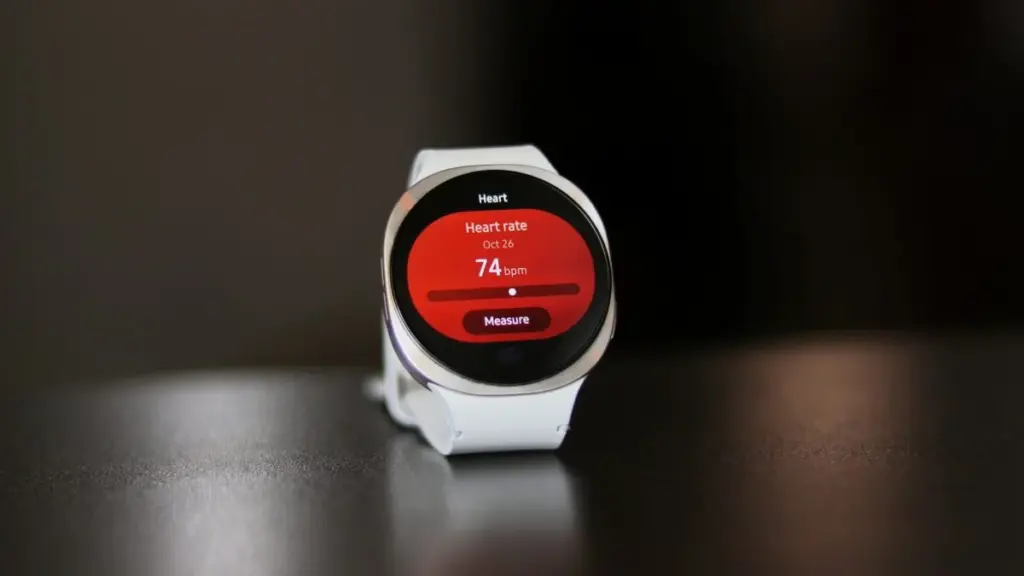
A smartwatch best known for tracking daily activity is being tested in a more clinical role. Samsung is working with Massachusetts General Hospital to examine whether Galaxy Watch 8 can help monitor the risk of muscle loss in people undergoing GLP-1 therapy.
The study shifts the device beyond basic fitness tracking. Researchers want to see whether continuous wearable data can offer early clues about changes in body composition while weight-loss treatment is underway.
What the study is trying to answer
GLP-1 drugs have become increasingly popular as weight-loss treatments, both in injectable and oral form. As use has grown, attention has also moved to a side effect that matters for long-term health: the possible loss of muscle mass.
That is the main issue behind the new research. The project is designed to test whether regular monitoring from Galaxy Watch 8 can help identify changes that may not be obvious from weight alone.
Who will take part
The study will involve 100 adults who have just started GLP-1 therapy. Participants will be split into two groups so researchers can compare two different approaches to monitoring.
One group will use Galaxy Watch to track body composition during treatment. The other group will receive only the standard guidance usually given to patients beginning GLP-1 therapy.
By comparing the two groups, the researchers hope to learn whether ongoing wearable monitoring adds value beyond routine advice alone.
Which data the watch will provide
The research will draw on biometric data collected by Galaxy Watch 8. The measurements include activity level, body composition, and heart rate.
That information will not be used in isolation. It will also be compared with more formal clinical monitoring to see how body changes develop during treatment.
A key point of comparison will be clinical DXA scans. These scans are intended to provide a more accurate picture of changes in body composition across both groups.
Why the question matters now
The rise of GLP-1 use has made the quality of weight loss a bigger concern. The focus is no longer only on how much weight comes off, but also on whether muscle is being preserved in the process.
That is why continuous data from a smartwatch is drawing interest. A device worn on the wrist can collect information over time, which may help physicians and patients watch for unwanted changes during treatment.
According to the figures cited in the study, nearly one in five adults in the United States has used a GLP-1 drug. That scale makes the issue of monitoring treatment effects increasingly relevant for healthcare systems.
A continuing collaboration
The partnership between Samsung and Massachusetts General Hospital is not new. The two have previously collaborated on a study that used biometric data from Galaxy Watch to support better mental health outcomes.
This latest project extends that relationship into weight-loss care. It also reflects a broader trend in digital health, where consumer wearables are being tested in more targeted clinical settings.
For now, the study is not meant to settle the question in advance. It is meant to test whether continuous data from Galaxy Watch 8 can genuinely help patients and doctors monitor and reduce the risk of muscle loss during GLP-1 treatment.
The final results will depend on how the Galaxy Watch group compares with the group that receives standard guidance, especially in terms of body composition, activity, and heart rate over the course of therapy.
Source: www.sammobile.com