Intel is pushing Arc G-Series into handheld gaming with a package designed to change more than raw performance. The company is pairing new silicon with a Windows 11 experience that is meant to feel less awkward on a portable device and more natural for gaming on the move.
That shift matters because handheld gaming is becoming a more competitive market, and Intel is entering it with partners already lined up. Acer, MSI, and OneXPlayer are among the brands confirmed to use the chip family in upcoming products, signaling that Intel wants an immediate presence rather than a cautious test run.
A handheld-focused version of Core Ultra 3
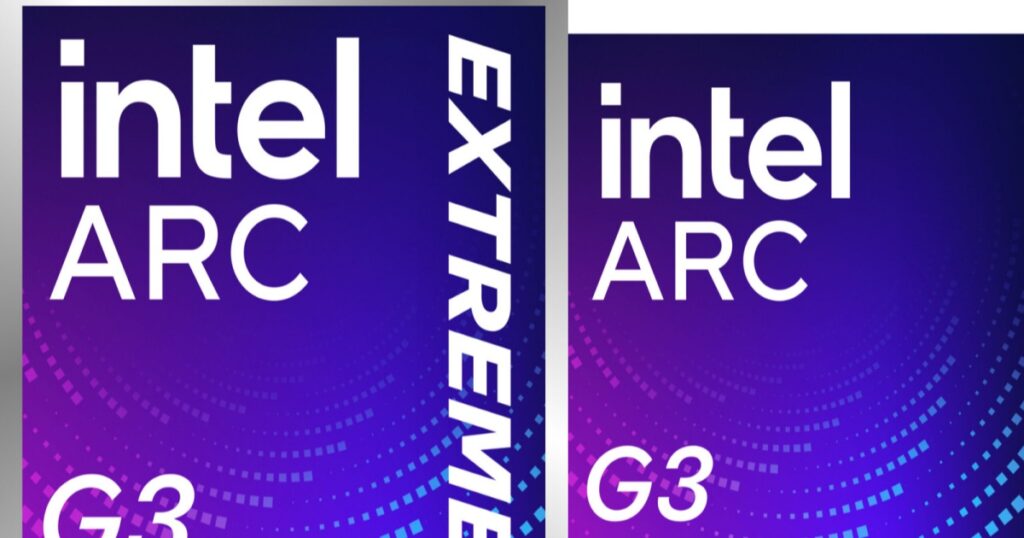
Intel says Arc G-Series is a modified version of the Core Ultra 3 line and is built on Intel 18A manufacturing. The company has not shared every technical detail, but it has revealed the main CPU layout for Arc G3 and G3 Extreme.
Both chips use two performance cores, eight efficiency cores, and four low-power efficiency cores. That configuration is meant to balance speed and power use, which is especially important for handheld devices that need strong gaming output without draining the battery too quickly.
On the graphics side, the chips use the Intel Arc B390 GPU. Intel says the platform supports real-time ray tracing and AI-based upscaling through XeSS 3, bringing features that are usually associated with larger gaming systems into a portable form factor.
Windows 11 gets a more console-like approach
One of the most notable parts of the announcement is not the chip itself, but the software experience around it. Intel says Arc G-Series will be optimized for the full-screen Xbox mode in Windows 11, reducing how often users need to deal with the standard Windows interface.
That matters because Windows has long been seen as less comfortable to navigate on handheld gaming devices. By pushing a full-screen gaming mode, Intel is aiming to make the experience faster and simpler when players want to jump straight into a game.
The effort also shows that Intel is not treating handheld gaming as a pure hardware race. The company is trying to shape the overall experience, from the interface to the graphics layer and the way the device is used day to day.
Connectivity and fast access to games
Intel is also building in connectivity that fits the handheld category. Arc G-Series supports Wi-Fi 7 R2, Thunderbolt 4, and dual Bluetooth 6, which should help with wireless accessories and faster data movement.
For portable gaming devices, that mix can be important when pairing controllers, connecting peripherals, or moving game data quickly. Intel presents these features as part of the complete platform, not as optional extras.
The company is also introducing Intel Precompiled Shaders as another feature aimed at reducing friction during gameplay. With this system, supported games can download shaders from the cloud in an optimized form, which may help shorten the waiting time before a game starts.
Several titles already support the feature, including Black Myth: Wukong, Call of Duty: Black Ops 6, Call of Duty: Black Ops 7, and The Outer Worlds 2. For handheld players, less time waiting and more time playing can be a meaningful improvement in everyday use.
The first devices are already named
Intel has identified the first wave of products expected to use Arc G-Series. The list includes Acer Predator Atlas 8, MSI Claw 8 EX AI+, and OneXPlayer.
Acer’s presence is notable because it shows the company expanding further into the handheld gaming market with Intel-based hardware. MSI continues its Claw line with Intel inside, while OneXPlayer joins the early group with a focus on high performance.
The lineup suggests that Intel wants to establish itself quickly in a segment that has already become crowded. With XeSS 3, real-time ray tracing, and a Windows 11 handheld mode all tied into the same platform, Intel is framing Arc G-Series as more than a new chip announcement.
Source: telset.id