
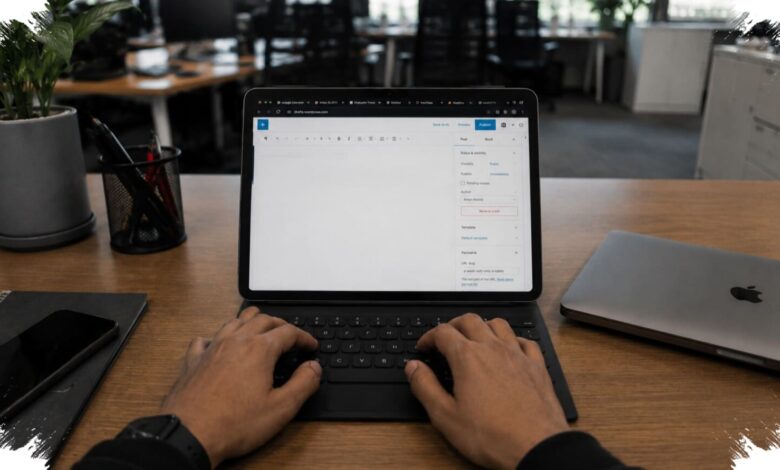
By 2026, the choice between a laptop and a tablet is no longer a simple matter of power or price. The deciding factor is increasingly how a device fits into daily work, mobility, and software needs.
That shift is reshaping buying decisions for students, office workers, and creative professionals alike. Tablets have become far more capable, while entry-level laptops have also grown more efficient, making the comparison less about raw strength and more about practical use.
Mobility is the clearest advantage for tablets
For people who move between locations often, a tablet offers one of its biggest strengths immediately: portability. Its compact size makes it easier to carry and less burdensome in a bag.
Affan Fauzan from Depok is one example of a user who moved from a laptop to a tablet because his work is now done more often outside the office. He said the smaller dimensions of a tablet feel far more practical when traveling.
That convenience also matters in everyday logistics. A tablet can fit into a smaller bag and is still easy to store on a motorcycle trunk during rainy weather.
Tablets are becoming serious work devices
Tablets are no longer associated only with entertainment. Devices such as iPad, Samsung Galaxy Tab, and Surface Pro are now used by many professionals as working tools.
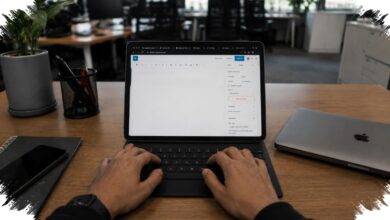
Support for desktop modes, multitasking, magnetic keyboards, mice, trackpads, and precise stylus input has made tablets much more versatile. In premium models, the category has even moved into tasks such as 4K video editing, digital illustration, and graphic design work.
Widyantara, a graphic designer from Bogor, uses a tablet to sketch and look for inspiration while working in different locations. He still relies on a laptop or desktop computer when the work becomes heavier.
| Device | Main Advantage | Limitation |
|---|---|---|
| Tablet | Compact, easy to carry, increasingly complete for work | Still less flexible than a laptop for complex workloads |
| Laptop | Strong multitasking and wider software compatibility | Less practical for high-mobility use |
Laptops still lead when the workload gets heavier
Despite the progress made by tablets, laptops remain stronger for demanding productivity. Desktop operating systems such as Windows, macOS, and ChromeOS are built to handle multiple applications more freely.
Users can manage many windows, open numerous browser tabs, work with spreadsheets and email, run communication apps, and connect external monitors with greater ease. Tablets already support split-screen and floating windows, but the experience is still less flexible when the work becomes complex.
Software compatibility remains another major reason laptops stay relevant. They are still the preferred choice for full versions of Adobe Premiere Pro, AutoCAD, Visual Studio, MATLAB, accounting software, and many corporate applications that require a desktop operating system.
The most sensible choice depends on the job
In practice, the best device depends on the main activity. Tablets are a better fit for students, field workers, healthcare professionals, and creative workers who often move from place to place.
Laptops are more suitable for office workers, programmers, video editors, professional designers, and anyone who runs multiple applications every day. As long as heavy computing and desktop software remain standard across many industries, laptops and tablets are likely to keep complementing each other rather than replacing one another.
That is why the 2026 buying decision is less about choosing a universally better device and more about matching the machine to the way work is actually done.