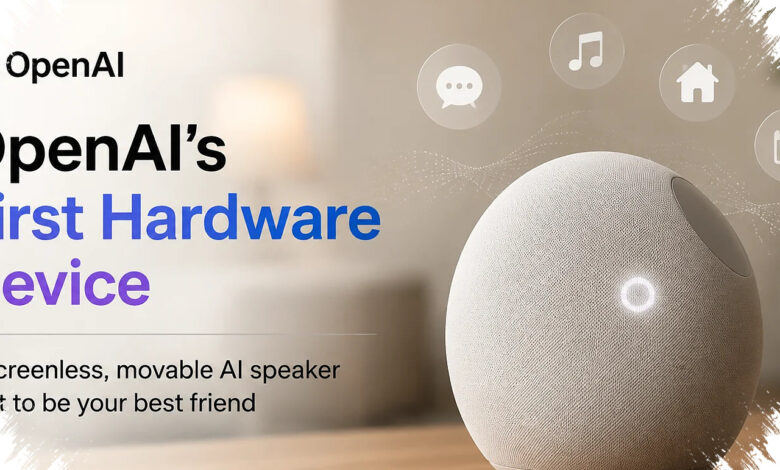
OpenAI is reportedly developing a consumer device that goes beyond the standard smart speaker format. Instead of a phone or a screen-based assistant, the company is said to be working on a portable AI speaker that can move from one room to another.
The idea stands out because it combines conversational AI with hardware designed to feel more alive. According to Bloomberg, as cited by Gizmochina, the device is being shaped as a personal companion rather than a static box that only plays audio.
A screenless device built to feel more responsive
The speaker is expected to include a rechargeable battery, along with a built-in camera and sensors to help it understand its surroundings. That setup would allow it to respond more intelligently than conventional smart speakers.
Its mechanical design is also reported to include movement elements. That approach could make interactions feel less like issuing commands to a machine and more like speaking with an assistant that has a distinct presence.
| Reported Feature | What It Means | User Impact |
|---|---|---|
| Screenless design | Portable AI speaker | Easier to place and carry around the home |
| Rechargeable battery | Can move between rooms | Greater flexibility in daily use |
| Camera and sensors | Reads the surrounding environment | Responses may be more contextual |
| Mechanical movement | More lifelike interaction | Feels closer to a personal assistant |
| GPT-Live | Real-time voice conversation | Faster help with questions and home control |
GPT-Live is expected to power the experience
The device is said to run on GPT-Live, OpenAI’s conversational voice technology that can listen and respond in real time. Its planned functions are similar to those of other smart speakers, including controlling home devices, playing music, answering questions, and reading messages.
What makes the project more ambitious is the reported plan for the speaker to learn from its owner over time. By accessing personal information, it could eventually anticipate requests and deliver more tailored responses as it gets to know the user better.
OpenAI is aiming beyond software alone
The project is being developed with help from former Apple executives, including members of Jony Ive’s LoveFrom. That connection suggests OpenAI wants the product to stand out not only through AI capabilities, but also through industrial design and the overall user experience.
OpenAI is reportedly targeting a 2027 launch, although some reports suggest additional details could emerge earlier this year. Pricing has not been announced, but one report places the expected range at $200 to $300.
The effort also comes amid legal tension. Apple has sued OpenAI over alleged trade secret theft, claiming the company hired key employees and used confidential information, an allegation OpenAI denies.
Even with that dispute, OpenAI reportedly believes its speaker will be meaningfully different from the smart-home product Apple is preparing. If it reaches the market, the device could mark OpenAI’s first serious step into hardware with a more personal approach than a typical voice assistant.