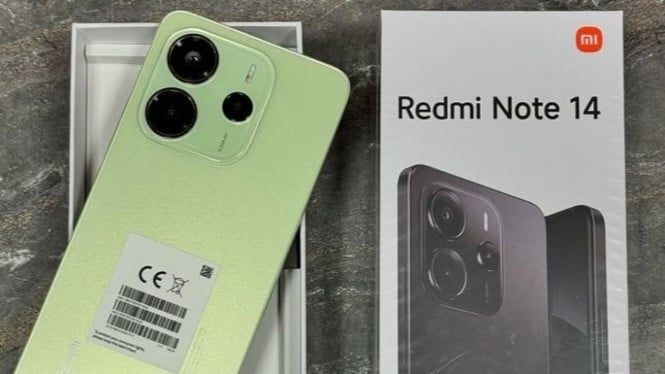
Redmi Note 14 remains a highly discussed smartphone in 2025 due to its attractive price of around $140 and solid specifications. Many potential buyers wonder if this device is truly worth purchasing this year. Before making a decision, it is important to review the key facts about its performance and features.
The phone is powered by the MediaTek Helio G99 Ultra chipset manufactured with a 6nm process. This chipset offers efficient power consumption and minimal heat, making the Redmi Note 14 reliable for gaming and daily multitasking. Storage uses UFS 2.2 technology, enabling faster read and write speeds that provide smooth multitasking without lag.
Performance and Usability
One notable upgrade is the fingerprint sensor integrated on the screen. Unlike many mid-range phones that still place the sensor on the power button, Redmi Note 14 looks more premium. The sensor is responsive, accurate, and conveniently located for thumb reach, enhancing user experience with quick and elegant screen unlocks.
Hardware gyroscope inclusion is another strength. Unlike software-based gyroscopes which can experience delays, this hardware sensor supports more precise motion detection. This is particularly beneficial for FPS or racing games where responsiveness is critical. The phone also features stereo speakers enhanced with Dolby Atmos technology, delivering loud and clear sound quality. An infrared sensor is included for remote control functionality of TVs and air conditioners, adding practical value.
Battery and Charging
With a large 5500mAh battery, the Redmi Note 14 easily lasts a full day or longer under normal use. Fast charging at 33 watts reduces recharge time to about one hour from zero to full. This combination of high capacity and fast charging is ideal for users who need extended use without frequent charging breaks.
Camera Capabilities
The 108MP primary camera produces sharp and clear photos. Video recording supports up to 30 fps with stable results, but at 60 fps the footage tends to be shaky and less smooth. A downside is the absence of an ultrawide lens, limiting options for landscape or wide-angle shots. For photography enthusiasts who prioritize versatility, this could be a drawback.
Considerations and Trade-offs
The device lacks Optical Image Stabilization (OIS), relying solely on Electronic Image Stabilization (EIS). This makes video capture less effective during movement compared to phones with OIS. The hybrid SIM slot requires users to choose between dual SIM use or microSD expansion, making simultaneous use impossible and occasionally inconvenient. Additionally, some users mention that the screen brightness of 1200 nits might not be sufficient under very bright conditions.
Despite these downsides, the Redmi Note 14 still offers balanced specifications for its affordable price near $140. The ongoing operating system updates provide reassurance for buyers wanting to keep the device up to date over the next few years.
Summary of Key Features
- MediaTek Helio G99 Ultra chipset with 6nm fabrication
- UFS 2.2 storage for fast data access
- In-display fingerprint sensor with quick response
- Hardware gyroscope for precise game controls
- Stereo speakers with Dolby Atmos support
- Infrared sensor for remote control functionality
- 5500mAh battery with 33W fast charging
- 108MP main camera (no ultrawide lens, no OIS)
- Hybrid SIM slot (dual SIM or microSD, not both)
- 1200 nit screen brightness
In conclusion, Redmi Note 14 is still a worthy purchase in 2025 with its efficient chipset, practical features, and competitive price. Potential buyers should weigh the benefits against the hybrid slot limitation, lack of ultrawide camera, and average video stabilization to ensure it fits their personal needs.