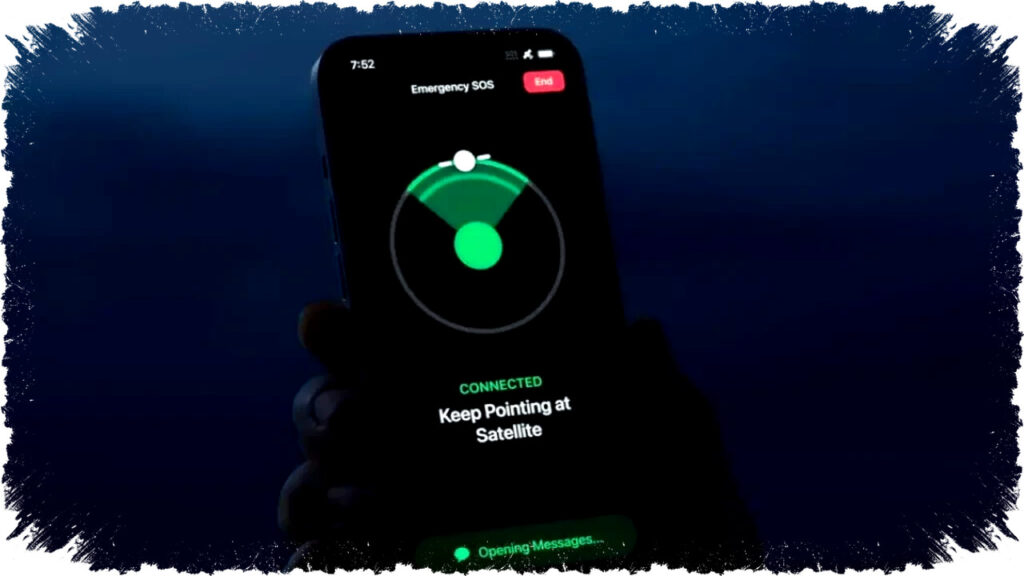
Technological advancements have brought a critical lifesaving feature to everyday devices like the iPhone. Recently, the Emergency SOS via satellite function enabled six skiers to send distress signals after a deadly avalanche in the remote Lake Tahoe mountains, where cellular and Wi-Fi networks were unavailable. This rare but vital scenario highlights how satellite communication technology embedded in consumer smartphones can assist in life-or-death rescue operations.
On February 17, 2026, a group of 15 skiers faced a sudden and tragic avalanche at Lake Tahoe, a remote mountainous area in the United States. Unable to reach emergency services through conventional mobile networks, six survivors utilized the iPhone’s satellite SOS feature to send crucial messages. They relayed their exact location, personal conditions, and environmental details directly to rescue teams, enabling prompt and effective evacuation efforts. Ultimately, rescuers saved six individuals, while eight sadly lost their lives and one remained missing.
Understanding Emergency SOS via Satellite on iPhones
This innovative communication method is built into iPhones starting from the iPhone 14 series and newer models, including recent Apple Watches. When a user attempts to call emergency services without cellular or Wi-Fi coverage, the device automatically suggests connecting via satellite. This function is designed to offer reliable communication even in the most isolated environments where regular signals are non-existent.
Once activated, the iPhone guides the user through a brief set of questions to gather essential information about the emergency. Then, it helps orient the device toward the sky to establish a satellite connection. Messages sent through this platform are highly compressed to about one-third of regular text size, significantly speeding up transmission times even under weak signal conditions. Under ideal open sky conditions, messages typically transmit within 30 seconds. However, obstructions such as dense tree cover or deep valleys can slow or block communication.
Additional Features and Service Coverage
Beyond emergency texts, the satellite connection can be used to send regular SMS and iMessages, or share real-time locations using the Find My app. This functionality ensures that users maintain at least minimal contact when traveling to remote areas. Apple provides free access to this satellite SOS service for two years after device activation. Future fees and subscription models have yet to be officially announced.
Currently, the satellite SOS service operates only in selected countries due to regulatory and infrastructure limitations. Supported regions include the United States, Canada, the United Kingdom, Japan, several European countries like Germany, France, Italy, Spain, Switzerland, and Australia, among others.
Real-World Impact and Previous Incidents
The Lake Tahoe case is not an isolated example. Similar usages of satellite SOS have saved lives in numerous emergency scenarios. Reports confirm successful rescues involving hikers injured in Colorado, families trapped in wildfires in Maui, and students stuck in deep canyons in Utah. These instances underscore that satellite-based emergency messaging is more than a novelty; it is a practical and critical safety tool for remote and hazardous situations.
How to Use Emergency SOS via Satellite on iPhone
If you find yourself in an emergency without cellular service, follow these steps:
- Ensure you are outdoors with a clear view of the sky.
- Hold your iPhone in hand, not inside bags or pockets.
- Follow the on-screen prompts to align your device with the satellite.
- Answer the emergency questions honestly and concisely.
- Wait for confirmation that your message has been sent before ending the session.
Even if the iPhone screen locks, the satellite connection remains active, enabling continued communication with emergency responders. Critical details such as GPS location, medical ID, emergency contacts, and battery status are automatically shared to aid rescue operations.
Satellite Communication: A New Standard for Safety
Previously, satellite communication was confined to specialized, expensive gadgets reserved mainly for professional expeditions. Today, embedding this technology in mass-market smartphones democratizes life-saving access for average users. For outdoor enthusiasts, travelers, and those exploring areas beyond reliable network coverage, this feature can be a decisive factor between survival and tragedy.
In summary, the integration of satellite SOS in iPhones represents a groundbreaking leap in public safety technology. The Lake Tahoe avalanche rescue dramatically demonstrates the indispensable role satellite communication now plays in emergency response. As infrastructure and regulations evolve, expanding access around the globe could transform how people prepare for and respond to crises in isolated environments.