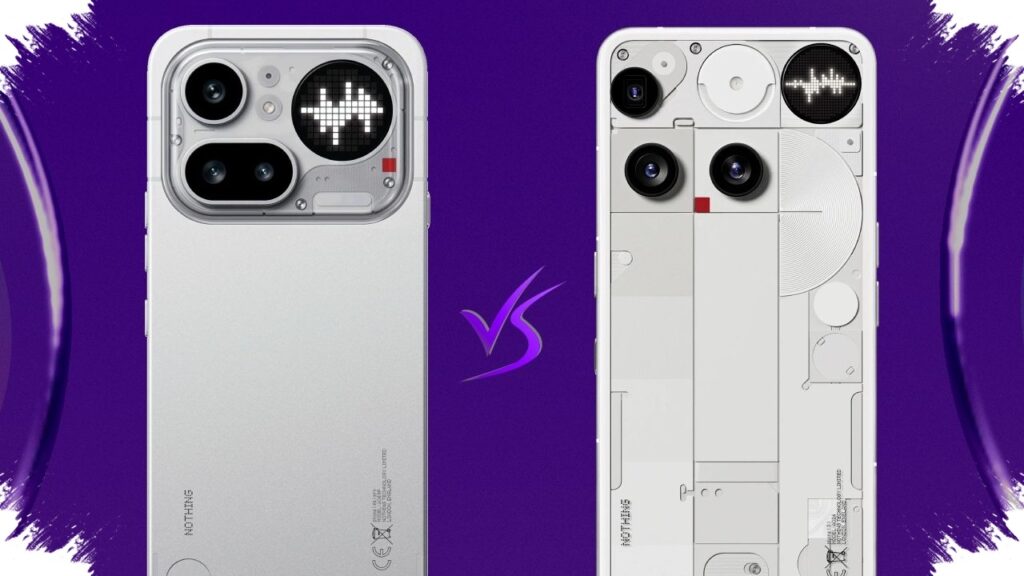
Nothing Phone (4a) and Nothing Phone (4a) Pro look like close siblings at first glance, but the Pro version is built to feel more polished in daily use. The difference is not about a dramatic redesign or a huge leap in hardware, but about a series of small upgrades that make the phone feel more refined, especially if you care about display smoothness, build quality, and long-term comfort.
For buyers trying to decide whether the extra cost is justified, the key question is simple: does the Nothing Phone (4a) Pro deliver enough real-world improvement over the standard (4a) to matter? Based on the available data, the answer depends on what kind of user you are, because both models share the same core identity while the Pro focuses on better materials, faster visuals, and a more capable chipset.
A Familiar Nothing Design, But the Pro Feels More Mature
Nothing keeps its transparent design language intact on both phones, including the signature Glyph lighting system that has become part of the brand’s identity. The standard Nothing Phone (4a) uses 63 LEDs on the back, paired with a glass body and plastic frame, while the Pro raises the bar with a unibody aluminum construction and an aluminum rear panel.
That change matters more than it sounds like on paper. Aluminum typically gives a device a firmer in-hand feel, better structural rigidity, and a more premium touch than plastic, and the Pro also increases the Glyph system to 137 LED points for broader customization.
Display Upgrades That You Can Actually Feel
The display is one of the clearest differences between the two models. Nothing Phone (4a) already offers a 120Hz AMOLED panel, which is smooth enough for most everyday use and easily ahead of many midrange competitors.
The Pro model steps up to a 144Hz display with higher brightness and a slightly sharper resolution. In real use, that can translate into smoother scrolling, more responsive-feeling animations, and better visibility outdoors under direct sunlight.
That said, the difference is subtle rather than transformative. Most users will notice the jump mainly during fast movement on screen, gaming, or frequent use in bright environments, where the brighter and faster panel has a more obvious advantage.
Performance: Same Family, Better Tuning on the Pro
Under the hood, the standard model runs on the Snapdragon 7s Gen 4, while the Pro is powered by the Snapdragon 7 Gen 4. On paper, that gives the Pro an edge in CPU structure and GPU performance, which should matter in multitasking, gaming stability, and sustained performance.
Here is a simple breakdown of the main hardware distinction:
- Nothing Phone (4a): Snapdragon 7s Gen 4
- Nothing Phone (4a) Pro: Snapdragon 7 Gen 4
- Result: The Pro should feel faster and more consistent under heavier loads
- Practical impact: Better gaming stability and smoother app switching
This is not a flagship-level performance gap, but it is the kind of upgrade that users feel over time. The standard 4a remains capable, yet the Pro is tuned for a smoother experience when the phone is pushed harder.
Battery Life Stays the Same, and That Is Not a Bad Thing
Interestingly, Nothing does not change the battery formula between the two phones. Both models carry the same battery capacity and support 50W fast charging, which is enough to get through a full day for most users without much anxiety.
That consistent battery setup makes sense because the Pro’s gains come from efficiency and performance tuning rather than a bigger battery. It also avoids one common problem in upgrade stories: more power without the endurance to support it.
For everyday buyers, this means the Pro is not trying to win with stamina alone. Instead, it keeps battery life steady while improving how the phone handles what’s already inside it.
Camera System: Small but Meaningful Refinement
Both phones use a triple-camera setup, including a periscope telephoto lens, which remains a relatively rare feature in this price segment. That alone makes the lineup more interesting than many midrange phones that still rely heavily on standard wide and ultrawide combinations.
The Pro version adds dual-pixel autofocus on the main sensor, which should improve focusing speed and consistency, especially in difficult lighting or when subjects move quickly. The rest of the camera hardware, including the selfie camera, does not change in a major way.
That means the Pro is not a reinvention of the imaging system. It is a refinement of it, aimed more at stability and reliability than at delivering a brand-new set of camera tricks.
Price Difference and Value
According to the reference, the Nothing Phone (4a) is expected to cost around $450, while the Pro sits near $500. That $50 gap is not huge, but it does point to a meaningful set of upgrades in materials, screen quality, and chipset strength.
For value-focused buyers, the regular 4a still makes a strong case. It keeps the Nothing experience intact and gives you the essentials at a lower entry point, which is often the smarter move if you do not need the extra refinement.
For buyers who want a more premium feel and are willing to pay slightly more, the Pro offers a more complete package. It does not change the formula dramatically, but it improves the parts you interact with every day.
Which Model Makes More Sense?
The choice between the two models becomes clearer when you match the phone to the user.
- Choose Nothing Phone (4a) if you want the lower price and still value the core Nothing design.
- Choose Nothing Phone (4a) Pro if you want a better display, stronger build, and a more polished feel.
- Choose the Pro if you game often or want more stable performance over time.
- Choose the standard model if battery consistency and clean software matter more than premium materials.
Nothing OS 4.1 remains part of the experience on both devices, so software identity is not a deciding factor here. The big difference is how refined the hardware feels, and in that area the Pro clearly pushes the lineup forward without abandoning the brand’s minimalist character.
What makes the Nothing Phone (4a) Pro interesting is that it does not chase flashy spec-sheet wins. Instead, it takes the same basic recipe and improves the parts that most users notice after a week, a month, or a year of use: sturdier materials, smoother visuals, stronger sustained performance, and a more premium hand feel.