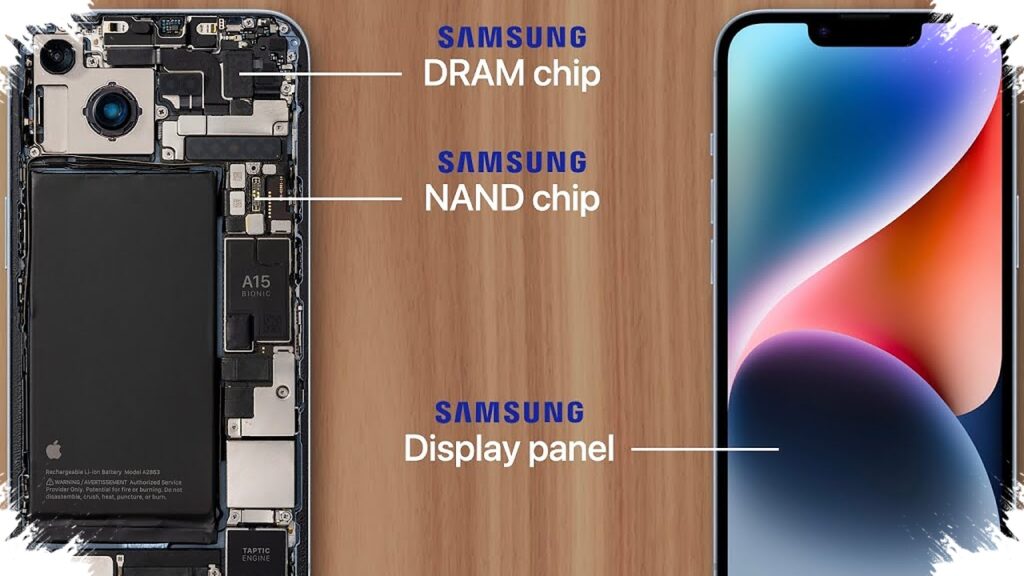
Apple’s iPhone display and camera components can come from Samsung, but that does not mean Samsung defines the final user experience. The key point is that Apple sets the specifications, tunes the hardware, and controls the software integration before the device reaches consumers.
That distinction matters because two products can use similar parts and still deliver very different results. In Apple’s case, the final quality comes from engineering decisions, calibration, and system-level optimization rather than from the supplier name alone.
Why the Samsung connection is real
Samsung has long played a major role in the global smartphone supply chain, including display panels and other advanced components. In the iPhone context, that means some critical parts can indeed be manufactured by Samsung before Apple assembles them into its own product design.
This is normal in the tech industry. Major brands often rely on specialized suppliers for screens, sensors, chips, batteries, and cameras, then shape the final product through their own standards and software.
Kisen Kumar, from the @kk24gadget account, addressed this issue after a user asked why iPhone parts could come from Samsung but still perform differently. His explanation focused on the difference between sourcing a component and defining the final product.
The chef analogy: same ingredients, different outcome
Kumar used a simple cooking analogy to explain the issue. He said that two chefs might buy the same eggplant and potatoes, but the finished dish will still taste different because each chef uses a different method, recipe, and level of skill.
That analogy works because a smartphone is not just a pile of parts. A premium device depends on how the company tunes color output, contrast, image processing, stabilization, and calibration across the display and camera system.
A display panel from the same supplier can still look different once another company adjusts the software and hardware behavior around it. The final result depends on the full pipeline, not only on the original component.
The builder analogy also fits mobile hardware
Kumar also compared the process to construction work. He said a house built by different builders can look and feel different even if the cement comes from the same warehouse.
That example reflects how engineering decisions shape a final product. In smartphones, the supplier may provide the raw material, but the brand controls the blueprint, the assembly standards, and the performance targets.
Apple is known for this approach. It does not simply buy components and leave them untouched, because it defines the parts’ specifications in advance and then integrates them with its own hardware and software ecosystem.
What Apple actually controls
Apple’s control extends far beyond purchasing parts. The company decides how its display should reproduce colors, how the camera should process images, and how the phone should balance battery life, performance, and thermal behavior.
Here are the main areas where Apple influences the final quality:
- Display calibration, including color accuracy and contrast.
- Camera tuning, including image processing and stabilization.
- Software integration, including how hardware responds in real use.
- Quality standards, including consistency across devices and batches.
That is why two phones can use similar supplier parts and still feel completely different in daily use. The supplier provides the component, but the brand defines the experience.
Why “parts from Samsung” does not mean “Samsung quality”
The phrase “from Samsung” can be misleading if it is interpreted too literally. A panel or camera module may come from Samsung’s manufacturing chain, but Apple can still demand a different specification and apply different optimization rules.
This is especially important in display and camera performance, where the final look depends on tuning. Color temperature, sharpness, motion handling, HDR output, and low-light image processing all depend on how the system is engineered after the part is sourced.
In practice, the brand with the stronger integration strategy often delivers the more consistent result. That is why Apple can use supplier-made parts and still produce a distinct iPhone experience.
How the smartphone supply chain really works
The modern smartphone industry depends on specialization. One company may excel at display manufacturing, another at camera sensors, and another at software integration.
Apple uses this model very effectively because it combines supplier expertise with tight internal control. The result is a product that may include externally made components but still reflects Apple’s own design language and performance goals.
This structure also explains why component sourcing should not be confused with final product ownership. A supplier can make the part, but the brand that tunes and integrates it shapes how customers experience it.
The same logic applies whenever consumers compare devices from different brands using similar suppliers. The important question is not only where the component came from, but how it was specified, tested, and calibrated before release.
For iPhone buyers, that is the reason a Samsung-made screen or camera part does not automatically mean the phone will behave like a Samsung device. The final experience still depends on Apple’s engineering choices, and that is where the real difference in quality begins.