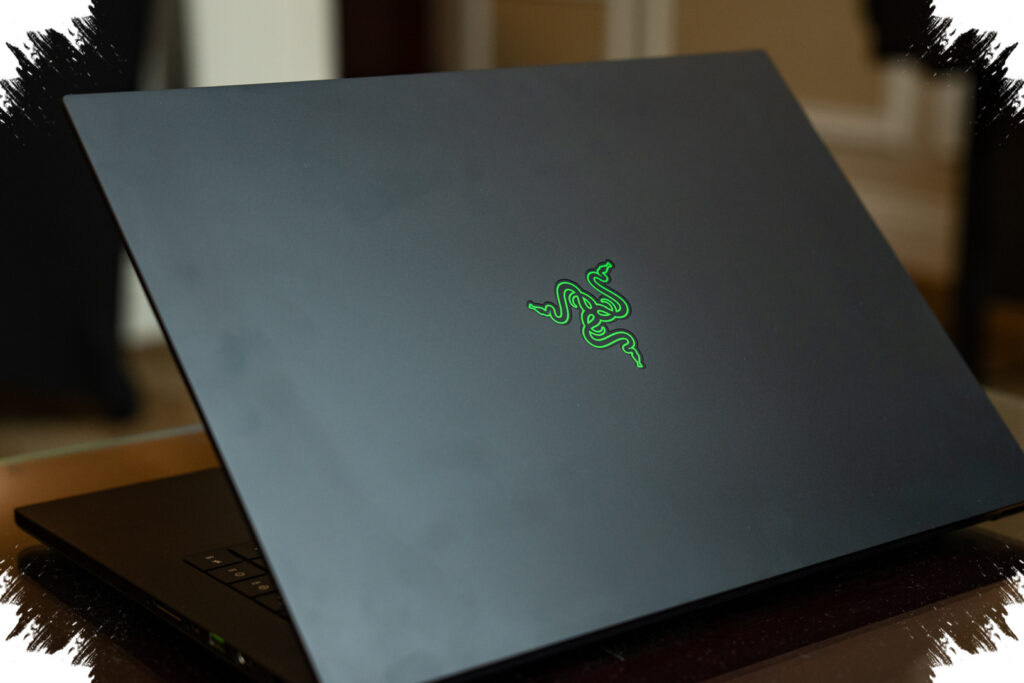
Razer’s latest Blade 16 pushes the thin-and-light premium laptop category into a more extreme place. It pairs an unusually slim chassis with hardware that is meant to satisfy both high-end gaming and demanding productivity work.
The headline specification is the option for NVIDIA GeForce RTX 5090, paired with up to 64GB of LPDDR5X 9600MHz memory. Razer says that memory is the fastest available on a laptop right now, which gives the Blade 16 a clear positioning as more than just a gaming machine.
Built for speed on both the screen and inside the chassis
Performance is not the only area where Razer is aiming high. The Blade 16 uses an Intel Core Ultra 9 386H based on Panther Lake, a chip with 16 cores that Razer says is 33% faster than the previous generation.
That improvement is paired with better efficiency, and Razer claims battery life is up to 60% longer. For a laptop this powerful, that matters because it makes the machine easier to use away from a charger during lighter tasks.
OLED panel tuned for fast gaming
Visuals are another major part of the Blade 16 pitch. The laptop carries a 16-inch QHD+ OLED display with a 240Hz refresh rate and a 0.2ms response time.
Razer also rates the panel at 1,100 nits and adds VESA DisplayHDR TrueBlack 1000 support. That combination is aimed at users who want fast motion handling as well as strong contrast for darker games and HDR content.
Thin design, modern connectivity
Despite the hardware inside, the Blade 16 still measures only 14.9 mm thick. That keeps it firmly in thin-laptop territory even though it is loaded with premium components.
Razer also equips this model with Thunderbolt 5, Bluetooth 6.0, and WiFi 7. It is the first Blade 16 to include all three, which gives the laptop a more future-ready connectivity package.
Premium pricing matches the spec sheet
The most expensive version of the Blade 16, with RTX 5090 and 64GB of RAM, is priced at around $4,999. That places it squarely in the ultra-premium segment, where design and top-tier hardware are expected to come at a steep cost.
Matt Elliott of CNET noted that this kind of performance-and-design combination is not cheap, especially with the broader RAM shortage helping push laptop prices higher. For buyers who want one device that can handle heavy work and high-end entertainment, the Blade 16 is clearly aiming at the top of the market.