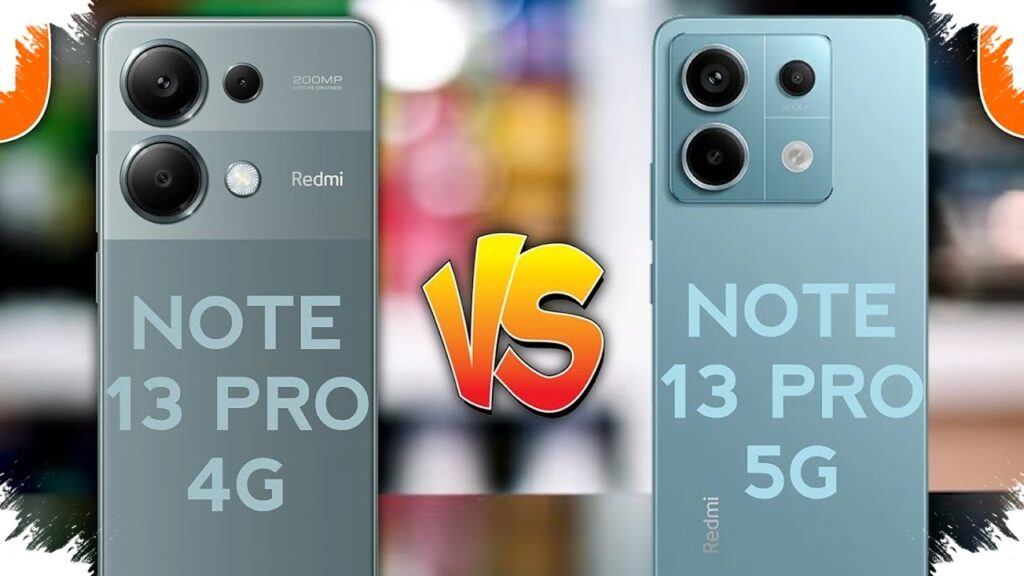
Redmi Note 13 Pro comes in two versions, 4G and 5G, and both still look competitive for users who want a premium mid-range phone. Each model carries a 200MP camera, a 6.67-inch AMOLED display with a 120Hz refresh rate, and 67W fast charging, so the main differences sit in performance, screen quality, and network support.
For buyers in 2026, the real question is not whether the two phones are similar, but which one matches daily needs better. The 4G model leans toward efficiency and lighter use, while the 5G version is built for stronger hardware and longer-term relevance.
Performance is the clearest divider
The Redmi Note 13 Pro 4G uses the MediaTek Helio G99-Ultra with a 6nm process. This chipset is described as energy efficient and capable of handling browsing, social media, streaming, and light to medium gaming without much trouble.
The 5G variant uses the Qualcomm Snapdragon 7s Gen 2, which is built on a 4nm process. It brings higher CPU and GPU performance and adds 5G support, making it the more advanced option for users who multitask often or want a phone that feels more future-ready.
That difference matters more in long-term use than on a spec sheet. The 4G model can still serve daily needs well, but the 5G model has a stronger hardware base for heavier apps and broader network support.
Display quality gives the 5G model an edge
Both phones use a 6.67-inch AMOLED panel with a 120Hz refresh rate, so scrolling and animations stay smooth. Even so, the 5G version improves the experience with a 1.5K resolution of 2712 x 1220 and peak brightness up to 1,800 nits.
The 4G model carries an FHD+ resolution of 2400 x 1080 and brightness up to 1,300 nits. It also uses Corning Gorilla Glass, while the 5G version gets the tougher Gorilla Glass Victus for better protection.
For users who often watch videos, play games, or use the phone outdoors, the 5G screen offers sharper visuals and stronger visibility. The 4G screen still looks solid, but it is clearly the more basic panel of the two.
Camera hardware is similar, but results may differ
On paper, both devices are equipped with a 200MP ISOCELL HP3 main camera. Xiaomi also includes OIS and EIS on both models to help stabilize photos and videos, along with 4x lossless zoom for closer shots.
Even with identical camera hardware, output can vary because chipset processing and software tuning are not the same. That means the 5G model may have an advantage in how it handles imaging tasks, especially when paired with its stronger processor.
Battery and design stay close
Battery size is almost identical, with the 4G version carrying 5,000mAh and the 5G version slightly ahead at 5,100mAh. Both support 67W fast charging, so charging speed remains one of the shared strengths.
In design, the two phones look equally premium at a glance. They use glass on the front and back, a plastic frame, an in-display fingerprint sensor, and an IP54 rating for dust and splash resistance.
Which one makes more sense?
The Redmi Note 13 Pro 4G fits users who focus on efficiency, regular communication, streaming, and other everyday tasks. It also works well for those who do not need 5G and want a phone that still feels capable without pushing performance needs too far.
The Redmi Note 13 Pro 5G is the better pick for users who want stronger performance, better display quality, and more room for long-term use. With its Snapdragon 7s Gen 2, 1.5K screen, higher brightness, and 5G support, it offers the more complete package for 2026.