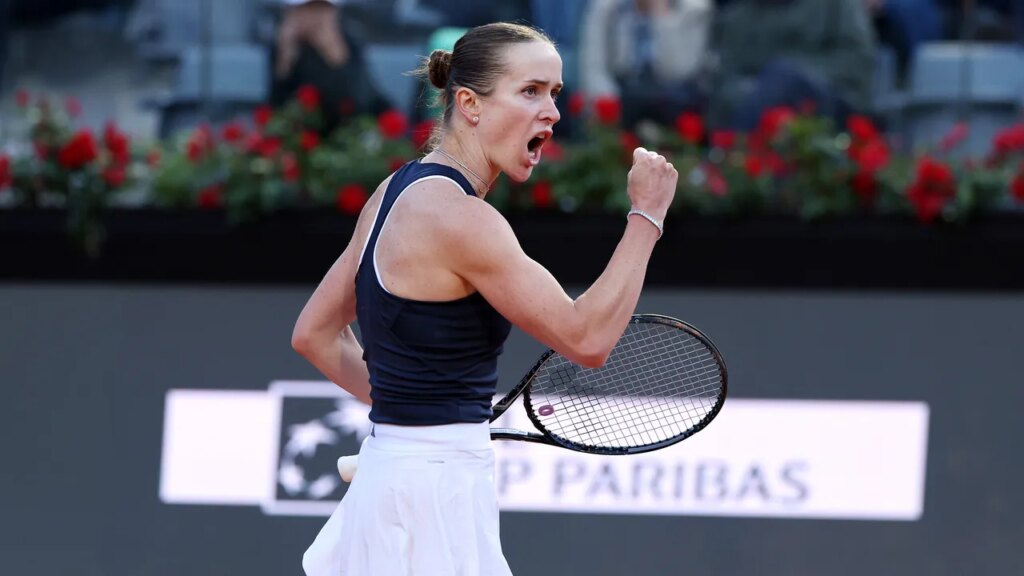
Elina Svitolina’s recent rise has been shaped by more than form and fitness. Her tennis now carries the weight of personal responsibility, national grief, and a clear tactical reset that has made her one of the most dangerous players on the women’s tour.
That change has been visible in the results. After winning Rome in early May and beating Elena Rybakina, Iga Świątek, and Coco Gauff on the way, Svitolina climbed to No. 7 in the world and strengthened her case as a contender at the French Open.
A player driven by more than rankings
For Svitolina, motivation can be difficult to find when the news from Ukraine is grim. She is from Odesa, while much of her professional growth came in Kharkiv, and both cities have suffered heavily during the war.
She also thinks about her grandmother in Odesa and the family and friends who have lived under siege for four years. Those thoughts often become her fuel, along with the knowledge that Ukrainian fans are watching and need something to celebrate.
Her three-year-old daughter, Skaï, has also become part of that routine. From Switzerland, where Skaï attends preschool, the child tells her to “win against the lady,” and Svitolina holds onto that simple instruction as she prepares for matches.
A different mindset from her early career
Svitolina was not always this measured. Earlier in her career, she chased titles with urgency and defined success through results, winning big events and reaching a career-high No. 3.
Back then, she was known mainly as a defensive counterpuncher. She was quick, steady, and disciplined, but her game depended more on endurance and reliability than on taking control early in rallies.
That version of Svitolina was effective, yet it had limits. More powerful opponents could push her around the court, and the style that once brought her success needed to evolve as the game became faster and more aggressive.
Why her game looks sharper now
Svitolina’s return to tennis after becoming a mother and after Russia’s invasion of Ukraine brought a new urgency to her development. She has said that modern tennis is increasingly about “who takes the earlier opportunities,” and that has pushed her toward a more attacking approach.
She now uses bigger groundstrokes and a stronger forehand to finish points sooner. That shift matters because she still has elite speed, but she knows she cannot rely on the same recovery ability she had in her twenties.
Her approach is built on efficiency as much as courage. “Sometimes it pays off, sometimes it doesn’t,” she said of her willingness to make braver decisions on court.
The challenge ahead at Roland Garros
Even after her strong run in Rome, Svitolina is not looking far ahead. She prefers to break the tournament into smaller pieces, starting with her opening match against Hungary’s Anna Bondar, a player who has beaten her at the U.S. Open and again in Madrid.
That caution reflects how she now manages the pressure around her. She does not seem interested in shielding herself from expectations as much as staying fully present for each moment, because every match carries its own demands.
The result is a version of Svitolina that feels more complete and more purposeful. She remains a fighter, but the force behind that fight now comes from a mix of family, country, and a game that has been reshaped to fit the demands of elite tennis.
Read more at: www.newyorker.com