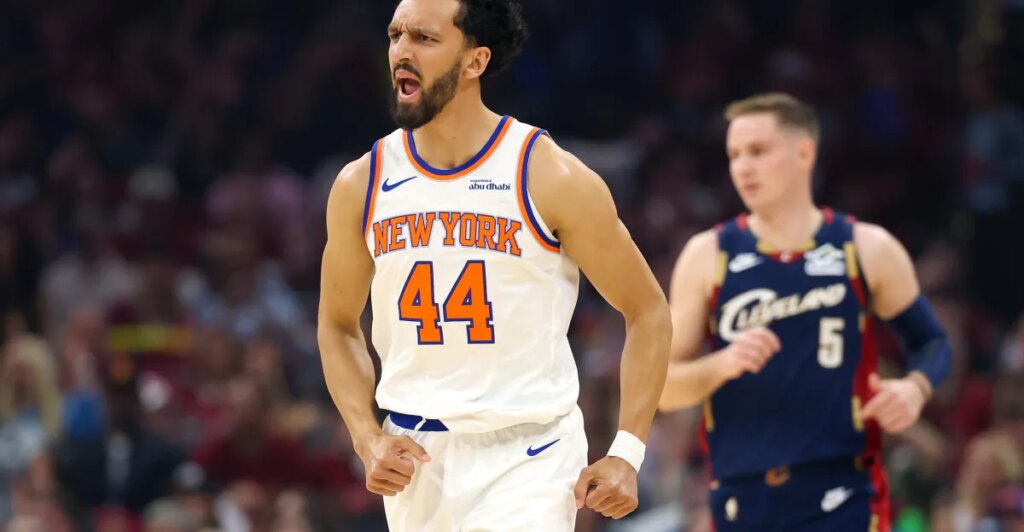
Everyone loves a player who turns a shaky situation into something bigger. Landry Shamet has done exactly that for the Knicks, and his rise from late-roster uncertainty to playoff difference-maker has made him one of the most unlikely heroes in recent team memory.
What makes his story stand out is not just the shots he made, but how unlikely his path looked at nearly every step. A veteran journeyman who had already played for five teams in six seasons, Shamet arrived in New York as a practical roster solution, not as someone expected to shape a postseason run.
From roster afterthought to trusted option
Shamet’s NBA career had already taken him from Philadelphia to the Clippers, then to Brooklyn, Phoenix, and Washington. He had built a reputation as a reliable shooter and a useful bench piece on playoff teams, including the Suns’ Finals run, but his stock dipped after the trade that sent him to the Wizards.
That move mattered because his role shrank in Washington and his shooting slipped to a career-low 33.8% from deep in 46 games. For a veteran guard in a league that constantly hunts for younger upside, the gap between staying employed and slipping out of the NBA can be small.
The Knicks brought him in as a low-risk option to compete for the final roster spot before the season. Ryan Arcidiacono was widely seen as a possible fit for that 15th spot, but New York instead signed Shamet, Marcus Morris Sr., and Chuma Okeke to battle for places.
Injury almost ended the run before it began
Shamet’s first chance with the Knicks nearly disappeared before it started. He dislocated his right shoulder in preseason action on a routine swipe at the ball against Moussa Diabate, and the injury left him sidelined for months.
The Knicks were under financial pressure and needed to manage every dollar, so they waived him while still trying to keep him close to the organization. The solution came through the G-League Draft, where Westchester secured him and Matt Ryan after making a move that included trading former second-round pick Trevor Keels to gain the top two selections.
That arrangement let Shamet rehab and practice in Westchester while the Knicks kept a form of control over his development. It was a smart workaround, and it bought New York time while preserving a player the staff still wanted in the system.
A quiet return that grew into real value
Shamet eventually returned on a standard contract in late December and began working his way into the rotation in early January. His first stretch was uneven, as he made only 4 of 20 from three over his first 14 games, but the improvement came as soon as he settled into a more stable role.
Over his last 19 games, he shot 43% from deep, and the season ended with a clear sign of how useful he had become. In April, he hit at least four three-pointers four different times, including seven in the finale against the Nets.
That production created the impression that he could matter in the playoffs, even if Tom Thibodeau’s short rotation suggested his minutes might shrink once the games became tighter. Instead, the bigger issue became whether the Knicks would even have Shamet available at all.
A second setback, and another chance to stay in the mix
Shamet’s next shoulder issue came in late November in Orlando, when he fought over a screen against Wendell Carter Jr. and hurt his right shoulder again. It looked serious at first, but an MRI showed a strain rather than another dislocation, and that changed everything for the Knicks.
He still missed two months, but the team never seriously considered moving on from him this time. The injury had become a test of how much he mattered, and the answer was clear enough that New York kept him in the plan through the rehab process.
When he returned, he did what he had done before: fit wherever the team needed him. He started when injuries hit Hart or Anunoby, came off the bench when called upon, and remained ready even when the rotation tightened around the team’s core pieces.
The playoff role that kept changing
Shamet entered the postseason expecting to be a useful bench piece again, but the first round did not unfold that way. He struggled in Game 1, was part of difficult lineups in Game 2, and then saw his role shrink further before Jose Alvarado took minutes away from him.
For a player who had already seen his standing fluctuate all season, the message was familiar: stay prepared and wait for the next opening. That opening came in a much bigger spotlight, and it changed the tone of the Knicks’ run.
Against Cleveland, he barely played until Mike Brown turned to a rare five-out look late in Game 1 while the Knicks trailed by 22. Shamet responded by helping change the game’s pace, disrupting Donovan Mitchell, knocking down a key three, and then hitting the corner shot that tied the game before delivering the overtime dagger.
That performance immediately placed him in the center of a huge comeback, and it showed why the Knicks had kept him around through so many twists. He did not need a starring role to matter, only the right moment to fire away with confidence.
Why his name now belongs in Knicks lore
Shamet’s impact did not come from one game alone. He also played a major part in the Philadelphia series, where his shooting helped drain life from the Sixers crowd in Game 3 and then buried them with another wave of threes in Game 4.
By the time the Knicks reached the Eastern Conference Finals, he had already moved from roster question mark to essential depth piece. He hit four more triples in 27 minutes in Game 3 against Indiana and finished plus-five, giving New York the kind of bench production that teams need in long playoff runs.
That is why his story resonates beyond basic numbers. A player who did not even have a guaranteed spot in preseason became important to a Knicks team chasing its first NBA Finals appearance in 27 years, and that kind of rise tends to stick in franchise memory.
For New York, Shamet’s journey has been about survival, patience, and timely shooting. For the Knicks’ fan base, it has become something better: the rare reminder that an unexpected signing can turn into a name that lasts well beyond one run.
Read more at: www.postingandtoasting.com