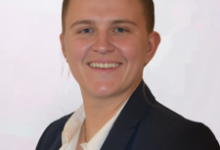
Venezuela’s acting president, Delcy Rodríguez, rejected Donald Trump’s suggestion that her country could become the 51st U.S. state. She said Venezuela would keep defending its “integrity, sovereignty, independence, [and] history,” and insisted that the country is “not a colony, but a free country.”
Rodríguez made the remarks at the International Court of Justice in The Hague on the final day of hearings in Venezuela’s dispute with Guyana over the Essequibo region. The territory is vast, resource-rich, and central to a long-running border conflict that has become more tense as oil interests have grown.
Trump’s remark draws a swift response
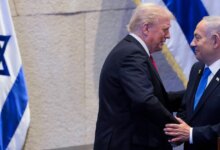
Trump said on Fox News that he was “seriously considering making Venezuela the 51st US state,” according to a post by Fox News co-anchor John Roberts on social media. The White House did not immediately comment on the statement, while White House spokesperson Anna Kelly later declined to discuss Trump’s plans in her own interview with Roberts.
Kelly described Trump as “famous for never accepting the status quo” and also said Rodríguez had been “working incredibly cooperatively” with the United States. Rodríguez, for her part, said Venezuelan and U.S. officials have been in contact and are working on “cooperation and understanding.”
The Essequibo dispute remains at the center
Before addressing Trump’s comments, Rodríguez argued that the Essequibo dispute should be settled through political negotiation rather than a court ruling. Venezuela has long claimed the 62,000-square-mile region, which makes up about two-thirds of Guyana and contains gold, diamonds, timber, and other natural resources.
The area also sits near major offshore oil deposits that are currently producing an average of 900,000 barrels a day. That output is close to Venezuela’s own daily production of about 1 million barrels a day and has helped turn Guyana into a major energy producer.
A conflict shaped by history and oil
Venezuela says Essequibo belonged to it during the Spanish colonial period, when the jungle region fell within its borders. An 1899 arbitration by Britain, Russia, and the United States placed the boundary along the Essequibo River, largely favoring Guyana.
Caracas argues that a 1966 agreement in Geneva later invalidated the 19th-century ruling and created a framework for talks. Guyana, however, brought the case to the International Court of Justice in 2018 after ExxonMobil announced a major oil discovery off the Essequibo coast.
The dispute escalated further in 2023, when Maduro threatened to annex the region by force after a referendum asked voters whether Essequibo should become a Venezuelan state. Rodríguez did not address that referendum in her remarks, but she accused Guyana of undermining the Geneva agreement by seeking a judicial solution instead of continuing negotiations.
International court weighs the case
Guyana’s foreign minister, Hugh Hilton Todd, told judges when the hearings opened that the dispute has been “a blight on our existence as a sovereign state from the very beginning.” He said 70% of Guyana’s territory is at stake.
The International Court of Justice is expected to take months before issuing a final ruling, and any decision would be legally binding. Venezuela has said that taking part in the hearings does not mean it accepts the court’s jurisdiction, keeping the political and legal fight over Essequibo firmly unresolved.
Read more at: apnews.com