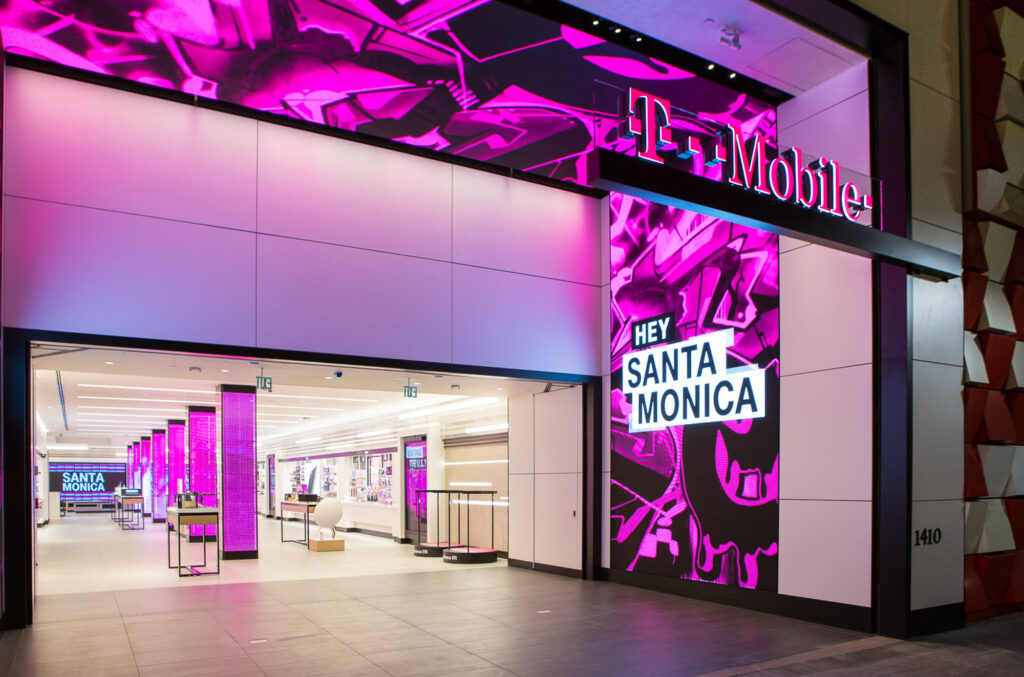
T-Mobile’s retail stores may soon look less like traditional sales counters and more like support points for app-based transactions. Internal email leaks discussed by employees on Reddit suggest the company wants nearly all retail transactions moved into a self-service model through the T-Life app by 2026.
That shift would affect some of the most common in-store tasks, including standard upgrades, adding lines, and new account activations. For store workers and customers alike, the idea has raised a new question: what happens when the app is the main path forward, but the store is still the place people go when something goes wrong?
What the timeline reportedly shows
According to posts linked to employees, access to T-Mobile’s legacy backend sales system for store representatives would end on July 31, 2026. After that, standard consumer upgrades and add-a-line requests would no longer be completed by staff through the old system.
The reported next step would begin on August 1, 2026, when upgrades and line additions in stores would have to be finished on the customer’s own device through T-Life. A further change is said to follow on October 1, 2026, when new account activations would also require the customer’s device and the same app.
If that schedule is implemented, store employees would shift from completing transactions to guiding customers through the digital process. That prospect is one of the main reasons the issue has drawn strong concern among workers discussing it openly on Reddit.
Why employees are uneasy
Many of the complaints focus on T-Life itself. Workers describe the app as slow, prone to freezing, and occasionally affected by connection problems, while also saying it feels overloaded because it contains nearly all of T-Mobile’s services and promotional content.
From the store floor, that creates a practical problem. Customers may still walk into physical locations expecting help, but the transaction would depend on an app that employees say does not always perform smoothly.
Workers also point to cases that are difficult to handle in a fully digital workflow. Examples raised include customers with broken phone screens, dead batteries, older devices that do not support T-Life, or single-line users who are locked out of their own accounts.
Some employees say they have not yet seen a clear fallback procedure for those situations. T-Mobile’s public remarks, however, indicate that support outside the app would still be available for customers who cannot access T-Life.
A store model that could change shape
The biggest impact of the reported plan is not only operational, but also functional. Instead of serving as a primary place for sales and activations, T-Mobile stores could become locations where staff spend more time troubleshooting app access and helping customers learn the digital process.
In practice, that could mean long interactions centered on logging into T-Life rather than finishing a transaction on the spot. One example discussed by workers said a staff member might spend 45 minutes helping a customer reset an Apple ID password before even starting the T-Life login process.
That kind of shift matters for employees because many retail roles are tied to sales commissions. A move toward app-led support rather than direct transaction handling has therefore sparked anxiety about income and job security, not just customer convenience.
There is also broader concern about the long-term role of physical stores. If core transactions move almost entirely into an app, some employees are questioning how much traditional sales labor, and even some store functions, will still be needed.
T-Mobile’s digital-first direction
The reported changes did not appear out of nowhere. Earlier in 2025, leaks had already suggested that T-Mobile wanted T-Life to become the center of all transactions as part of a digital-first strategy, with full dependence on the app targeted by the end of 2026.
The internal email linked to T-Mobile COO Jon Freier appears to give that direction a more specific timeline. T-Mobile has also said it continues to see momentum in T-Life, pointing to higher customer satisfaction for app-based transactions and saying frontline teams are getting faster, simpler tools.
At the same time, the company has not confirmed the rumored rollout schedule directly. Its public position is that digital experiences will keep expanding to serve customers in stores, by phone, and through T-Life, leaving the exact execution of the transition still unresolved for both customers and employees.
Source: www.androidauthority.com