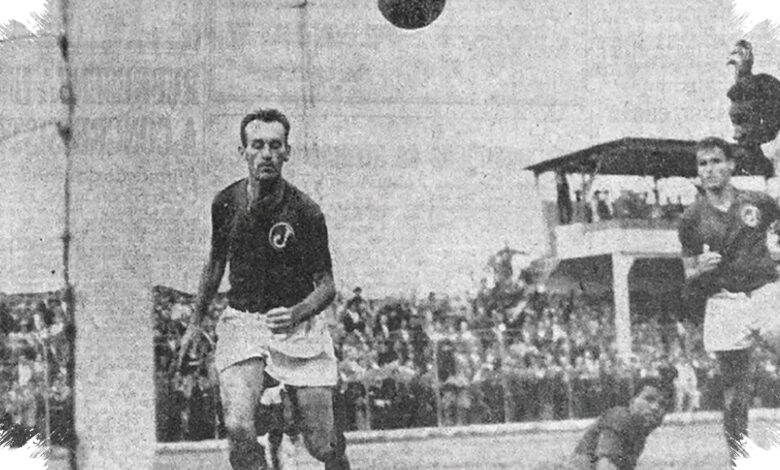
A goal Pelé regarded as the finest of his career has been recreated despite never having been captured by a camera. Google DeepMind used AI, historical research, and new location footage to bring the 1959 moment back into view.
The project centres on “Gol da Rua Javari”, scored by Pelé on 2 August 1959 at Estádio Rua Javari in São Paulo. Its reconstruction appears in a mini-documentary now displayed at Museu Pelé in Santos, Brazil, and available on Google’s YouTube channel.
The documentary does not present its images as a replacement for firsthand memory. Google said the work is intended as a tribute to collective memory, football history, and Pelé’s legacy.
A Goal Preserved Only in Memory
The original match left no known camera recording, making the goal an unusually difficult historical event to visualise. Pelé repeatedly called it his best goal after beating several defenders and the goalkeeper with three sombrero touches while keeping the ball off the ground.
Google DeepMind worked with Pelé Brand, Pelé’s family, historians, sports journalists, and local communities in Brazil. Their involvement was intended to ensure the digital sequence was informed by archives and shared recollections rather than visual interpretation alone.
The research team assembled nearly 2,000 historical documents before producing the sequence. The material included stadium blueprints, archival photographs, media reports, family albums, and match diagrams.
| Production Stage | Key Material | Purpose |
|---|---|---|
| Historical research | Nearly 2,000 documents and more than 3,600 photographs | Rebuild the stadium, match, and 1959 context |
| Location filming | Rua Javari stadium, 1950s costumes, leather ball | Create the visual basis for the scene |
| Digital production | Gemini Omni, Veo, Nano Banana Pro, visual effects | Create a period-style cinematic image |
More than 3,600 historical photographs were also reviewed to reconstruct the appearance of Estádio Rua Javari in that period. Testimony from eyewitnesses, sports journalists, and residents of the Mooca district in São Paulo helped fill gaps left by written records.
AI Combined With Practical Post-Production
After the research stage, the production filmed directly at Estádio Rua Javari using period-appropriate costumes and a leather football. The footage was processed with Gemini Omni, Veo, and Nano Banana Pro to build Pelé’s likeness, his number 10 shirt, the stadium architecture, lighting, and crowd atmosphere.
A central element was Veo 3-based Performance Control. The system captured the three-dimensional movements of a modern stunt performer and translated them into movements intended to resemble Pelé’s playing character with greater precision.
The AI output was not used as the final image without further work. The team applied traditional visual-effects techniques, including compositing, colour balancing, and film grain, to create a texture associated with 1950s cinema.
The material also went through a filmout machine to give the finished footage an appearance closer to the period being portrayed. This mix of digital tools and conventional post-production was used to preserve the intended historical atmosphere.
According to Google, technology cannot replace the people who were in the stadium on the day the goal was scored. The project instead presents AI as a tool that can work alongside historical research, archival material, and human memory.
The reconstruction arrives as interest in football is also reflected in Indonesian searches related to the 2026 World Cup. Google recorded frequent searches from 9 to 16 July 2026 about where to watch football, how to watch the 2026 World Cup on a phone, and how to watch football for free.
The Pelé project illustrates how generative AI can provide new access to events that had survived primarily through stories. Its historical value, however, remains dependent on rigorous archival work, human testimony, and clear disclosure of the technology’s limits.