


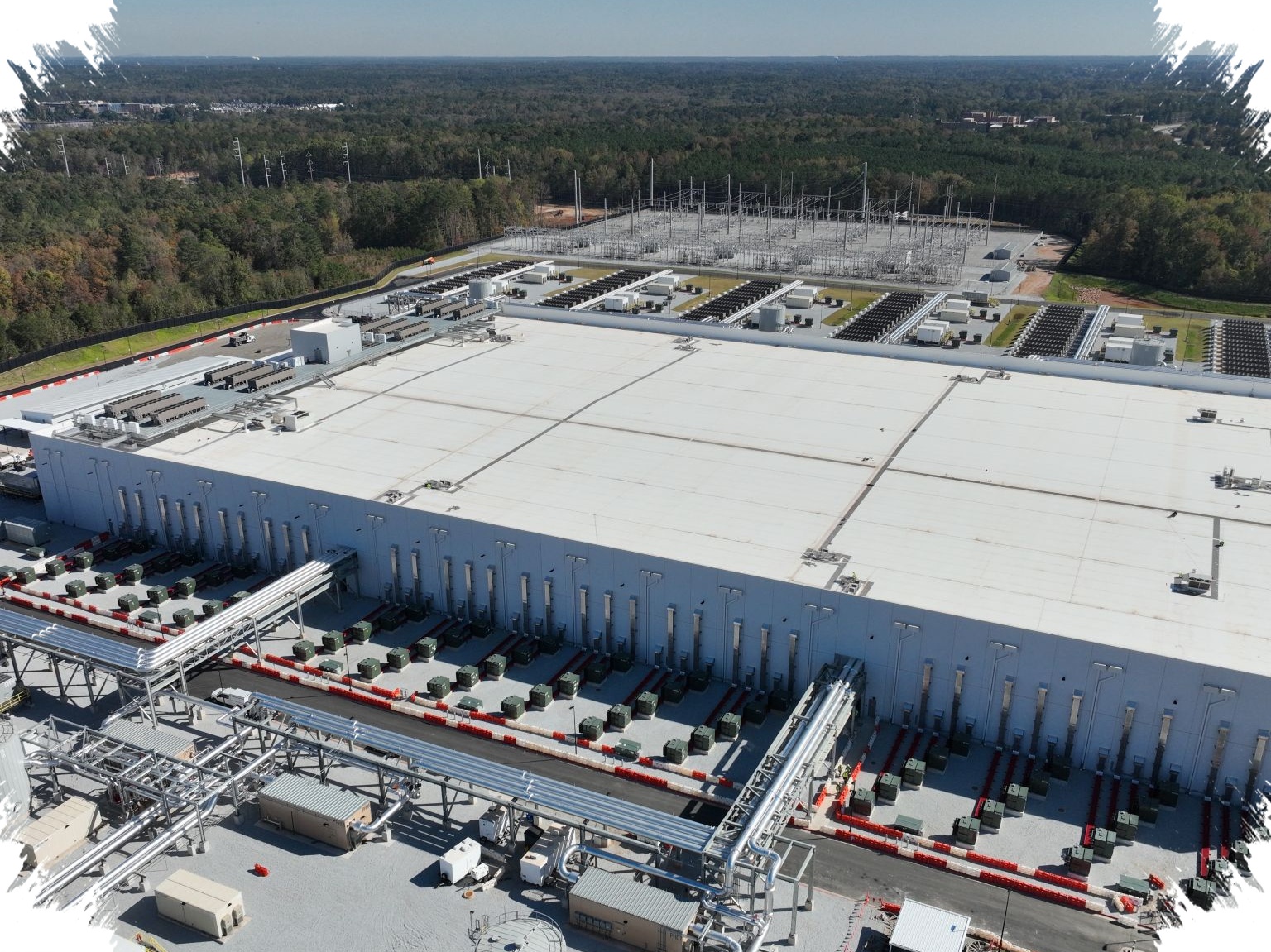
The AI boom is running into a problem that has little to do with software. The bottleneck is increasingly physical: data centers are not coming online fast enough to match the pace of demand.
That delay is now slowing expansion across major technology companies and making it harder to turn large AI investments into revenue-generating services. Projects in the United States have slipped behind schedule, creating a wider logjam in the AI supply chain.
Infrastructure is lagging behind demand
Financial Times, citing SynMax data, reported that several major data center projects linked to companies such as Microsoft and OpenAI are moving more slowly than planned. Some are said to be at risk of missing completion deadlines by more than three months.
That matters because these facilities are meant to provide the computing muscle for AI training and operations. When they are not ready on time, companies cannot fully deploy the capacity they have already paid for.
The result is a growing mismatch between the scale of AI ambition and the infrastructure needed to support it. OpenAI and Meta, both of which have poured billions into AI development, now face longer waits before the computing resources they need are fully available.
Labor shortages are slowing construction
One of the biggest obstacles is the shortage of specialized workers. Financial Times, citing two construction executives, said electricians and pipe fitters are among the hardest roles to fill on these projects.
Data centers are not ordinary buildings. They require high-spec electrical systems, cooling infrastructure, and networking equipment, which makes the construction process more complex and more sensitive to labor gaps.
When skilled workers are hard to find, schedules slip and costs can rise. In a sector where timing is critical, even modest delays can create a chain reaction across later phases of construction and deployment.
Power, equipment, and land are all under pressure
Electricity supply is another major constraint. Some new facilities in the U.S. are said to need as much energy as a nuclear power plant produces, putting heavy strain on local grids.
The situation is made harder by shortages of essential equipment such as gas turbines and transformers. As demand for infrastructure rises quickly, long waits for these components can stall projects that were otherwise ready to move forward.
Land also remains a major factor. OpenAI, for example, is building a 1,200-acre data center in the U.S., and many companies have chosen remote sites because the land is cheaper there.
Lower land costs can help reduce upfront spending, but they do not remove other pressures. In some regions, labor costs can climb by as much as 30 percent, especially when multiple projects compete for the same workforce.
Financing is becoming more difficult
The construction challenge is now feeding into the financing side of the business. Large-scale data center investments require enormous capital, and delays make lenders more cautious.
The reference article said several U.S. banks recently stepped back from financing commitments for data center projects tied to Oracle. That move was linked to OpenAI’s multi-year commitment, which is valued at $1.4 trillion.
Wes Cummins, chief executive of data center operator Applied Digital, summed up the situation bluntly in a comment to Financial Times: “Financing at this scale is hard.”
That statement reflects a larger reality for the AI sector. The main hurdle is no longer only the development of models or chips, but also the ability to fund and deliver the infrastructure around them.
Geopolitical risk adds another layer
Outside the United States, the outlook is also being shaped by geopolitical uncertainty. New data center investment in the Middle East is described as being in limbo because of the conflict between the U.S. and Iran.
That uncertainty narrows the options for companies that need alternative locations to expand capacity. It also makes future investment decisions more difficult, particularly for projects that depend on stable conditions over long build cycles.
The reference article also noted that Iran’s Islamic Revolutionary Guard Corps identified 18 major U.S. technology companies as “legitimate targets” for attack. The list includes Meta, Google, Apple, Microsoft, Nvidia, and Tesla, with threats aimed at data centers and regional offices.
Even so, industry participants are not uniformly pessimistic. Representatives of companies building and operating data centers for clients, including Nebius and Applied Digital, still say they expect their projects to be delivered on time.
That split view shows that the pressure is real but uneven. Yet as long as power, labor, equipment, land, and financing remain constrained, data centers will continue to be the point where AI growth can slow most sharply.