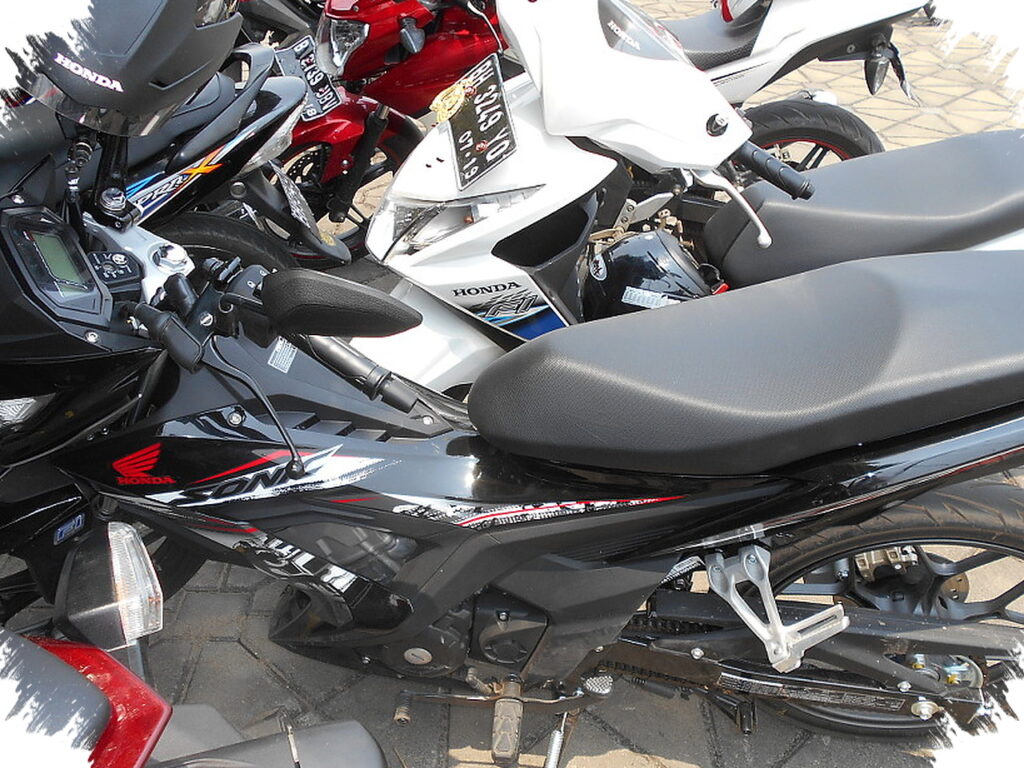
Honda Sonic 150R continues to attract attention among young riders who want a sport underbone that feels practical in daily use. Its appeal comes from a mix of agile handling, a responsive engine, and a design that still looks sharp in a crowded 150cc market.
For many buyers, the attraction is not only about appearance. The model keeps its place because it delivers a package that fits urban mobility, while still carrying a sporty character that stands out on the road.
A sporty look that still fits young tastes
One of the strongest reasons behind the Sonic 150R’s appeal is its styling. Sharp body lines, a sporty front light, and a digital instrument panel give it a modern look that remains relevant in the underbone sport segment.
That visual identity also matters beyond style alone. For many younger riders, an aggressive-looking motorcycle functions as part of personal expression, especially when it is used for daily commuting and regular street riding.
The body design also draws interest from modification enthusiasts. Its shape is considered flexible enough for customization, allowing owners to add personal touches without losing the motorcycle’s built-in sporty character.
Lightweight handling remains a key strength
Another reason the Sonic 150R stays in demand is its lightweight nature. The relatively easy-to-manage weight makes the bike more convenient in dense traffic and during quick maneuvers in city streets.
The riding position also supports everyday use. It is designed to feel ergonomic, helping the motorcycle stay comfortable for routine travel while still offering a sense of stability when ridden at higher speeds.
That combination matters for younger riders who want one motorcycle for several needs. A model that looks good but is difficult to handle often loses appeal, while a lightweight machine with practical ergonomics remains useful far longer.
The 150cc engine still plays a major role
Under the bodywork, the Honda Sonic 150R uses a 150cc DOHC liquid-cooled engine. Its character is known for quick acceleration response while still maintaining fuel efficiency.
That type of power delivery suits riders who prefer lively throttle response. In busy roads, quick reaction helps with overtaking and lane changes, making the motorcycle feel more flexible in real-world use.
The engine’s balance of performance and practicality also helps explain why the model still has a loyal following. In a segment with many choices, that mix can be difficult to match.
Maintenance and ownership remain straightforward
Beyond design and performance, the Sonic 150R also benefits from Honda’s broad service network. For owners, that means easier access to routine maintenance and greater peace of mind over long-term use.
Parts availability is another practical advantage. Riders who want to keep the motorcycle in good condition usually value a setup that does not make maintenance complicated or time-consuming.
This factor is especially relevant for younger consumers. A motorcycle may attract attention through style, but ownership comfort often depends on how easy it is to service and support over time.
Still competitive in a crowded segment
The Honda Sonic 150R remains competitive because it brings together several important strengths in one package. Its sporty appearance, light handling, responsive engine, and wide after-sales support keep it relevant in the sport underbone class.
Honda’s reputation also helps maintain market interest. In a market that continues to change, the Sonic 150R is still seen as a motorcycle that balances function and lifestyle appeal for young riders.
That is why the model continues to draw attention from buyers who want a daily motorcycle with a sporty identity. Its combination of agility, ease of care, and strong visual character keeps it present in the minds of young riders looking for a practical and distinctive machine.