


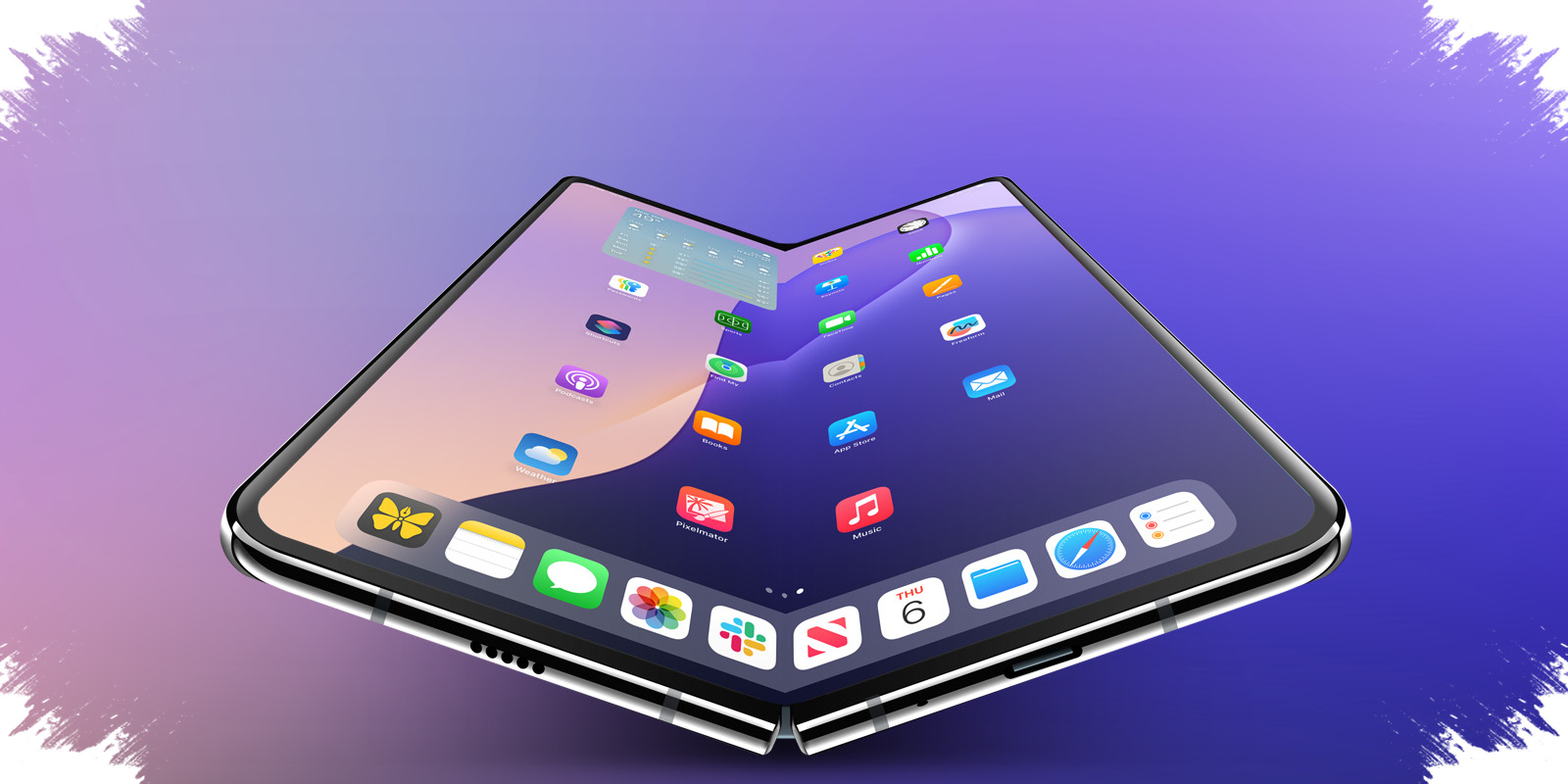
Apple’s long-rumored foldable iPhone is starting to look less like a standard industry follow-up and more like a deliberate attempt to reshape the category. The biggest attention-grabber is the reported 4.5 mm thickness when unfolded, a figure that would place the device among the thinnest phones Apple has ever made.
That slim profile stands out because foldables have often been judged as much by their bulk as by their flexibility. In this case, Apple appears to be aiming for a design that reduces that compromise rather than simply accepting it.
A thin body with two different profiles
The device is currently being discussed under the names iPhone Fold and iPhone Ultra. When closed, leaked figures place its thickness somewhere between 9.4 mm and 11.0 mm, depending on the source.
Once opened, that number reportedly drops to 4.5 mm. If that detail proves accurate, the phone would not just be Apple’s first foldable, but also a statement about how far the company is willing to push slim hardware in a complex form factor.
Displays built for two modes of use
The main inner display is said to measure 7.8 inches and use an OLED panel with a 4:3 aspect ratio. The outer screen is reportedly 5.5 inches and adopts a wider, passport-style layout.
That combination points to two different usage patterns. The larger panel would suit multitasking, gaming, and media consumption, while the outer screen would serve quicker actions such as checking notifications, replying to messages, or handling short calls.
Apple is also said to be keeping the front cleaner by using a punch-hole camera rather than a larger notch. That approach would help make the display area feel more open and less visually interrupted.
Trade-offs needed to keep the design slim
A body this thin appears to come with clear compromises. One of the most notable is the possible removal of Face ID, with Touch ID instead placed on the side of the device.
That would mark a significant shift for Apple, since Face ID has been a defining feature of its premium iPhones for years. In a foldable design, though, internal space seems to be prioritized over familiar biometric hardware.
The phone is also expected to be eSIM-only, without a physical SIM tray. That choice would free up additional internal room, which is especially important in a device that must accommodate both a folding mechanism and two body sections.
Materials also reflect that compact engineering approach. The frame is said to use a titanium alloy, while the hinge component is reportedly built with LiquidMetal.
Premium hardware across the board
Performance rumors place an A20 chip inside the device, built on TSMC’s 2 nm process. The phone is also said to come with 12GB of RAM, which would align it with the Ultra and Pro class for the same period.
Battery capacity is expected to land between 5,400mAh and 5,800mAh with a dual-cell design. For a foldable that is unusually thin, that range matters, since battery life often becomes one of the most difficult parts of the category to balance.
Camera hardware is described as restrained but focused. The rear setup reportedly includes two 48MP sensors, one wide and one ultra-wide, with no telephoto lens.
On the front, two 24MP cameras are mentioned. One would sit on the outer display, while the other would be placed on the inner screen using either an under-display or punch-hole arrangement.
A dedicated camera control button is also said to be part of the package. That detail suggests Apple still wants the foldable to remain strong in everyday imaging, even while working within tight space limits.
A limited launch strategy
The device does not appear to be planned as a mass-market product at the start. Initial production is reportedly capped at around 10 million units, which positions it as a premium and relatively exclusive model.
Pricing expectations match that positioning. The starting range is said to sit between $2,320 and $2,399.
Timing reports point to a September 2026 reveal, although actual shipments could slip to December 2026. Apple is also said to be studying foldable devices from competitors to better understand what already works, and what does not, in the market.
Taken together, the leaks suggest that Apple is approaching foldables with a strong emphasis on precision and thinness rather than simply joining the segment with a familiar template. The reported 4.5 mm unfolded body is now the detail drawing the most attention, because it hints at how Apple may try to redefine what a premium foldable can look and feel like.