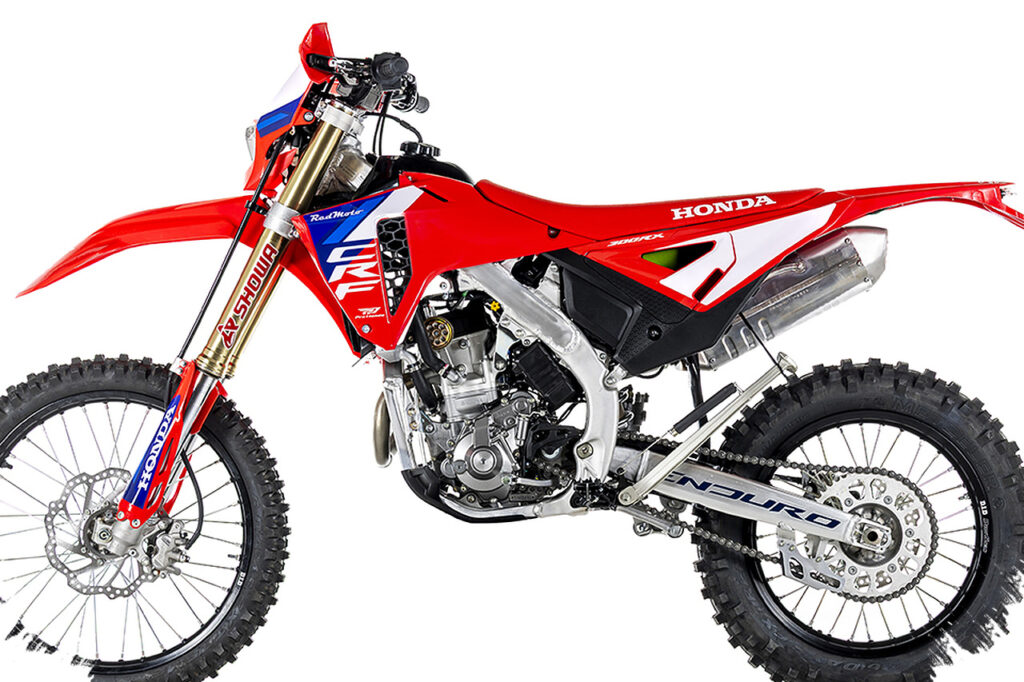
What makes the Honda CRF 2026 stand out is not a cosmetic refresh, but a clear shift toward harder off-road use. The model is positioned with a stronger technical package aimed at giving riders more control, better stability, and greater confidence on demanding terrain.
That direction becomes visible almost immediately in the way Honda has refined the suspension. The updated damping system is intended to keep the bike comfortable while also making it more stable over rocky paths, muddy sections, and steep climbs.
Suspension takes priority
For a trail motorcycle, suspension quality often determines how usable the bike feels once the terrain turns unpredictable. Honda has focused on making the CRF 2026 easier to manage in technical conditions, where fast reactions and consistent footing matter more than looks.
The improved chassis behavior is meant to help riders maintain precision when the trail demands quick direction changes. That matters most when the surface is uneven and the motorcycle has to stay composed over repeated impacts.
Sharper engine response for low- to mid-range riding
The engine also receives attention, and the biggest change is in how it responds. Honda says the power delivery is quicker, especially in the low to mid range, which is the zone riders often rely on when navigating narrow and difficult trails.
That character suits off-road riding, where sudden acceleration can be needed on uneven ground. Alongside that sharper response, stability under hard use is also part of the package, helping the bike feel more controlled when conditions become more demanding.
Honda has also equipped the model with a new fuel injection system. The result is a more optimized fuel supply, which supports both performance and fuel efficiency.
Lighter body, stronger braking
The CRF 2026 keeps the aggressive, slim off-road identity that has long defined Honda’s trail models. At the same time, it introduces new graphics and a body structure that is claimed to be lighter.
A lower weight can make a noticeable difference on technical routes. It usually helps the bike change direction more easily and makes handling feel more responsive in tight sections.
Braking has not been overlooked either. The updated brake system is designed to deliver stronger stopping power, especially on descents, in narrow corners, and on slippery surfaces.
In off-road riding, braking needs to be as controlled as acceleration. That is why a stronger brake setup becomes an important part of the CRF 2026’s technical upgrade.
Comfort and endurance for longer rides
Honda has also paid attention to ergonomics. The seating position is made more comfortable so riders can stay focused during long trips or extended runs on difficult routes.
Better ergonomics also help reduce fatigue. That is especially relevant on a trail bike, where the rider often shifts body position repeatedly as the terrain changes.
With its updated handling, quicker engine response, improved efficiency, lighter body, stronger brakes, and more thoughtful ergonomics, the CRF 2026 is aimed more clearly at serious off-road use. Its development direction suggests a machine built for riders who want tougher capability on extreme trails rather than a simple visual update.
Public attention has also turned to pricing, although no official figure has been announced. Some observers expect the latest CRF to cost slightly more than the previous generation, in line with the number of updates it brings.
Community reaction has been generally positive. Many see the CRF 2026 as a meaningful step forward in performance, technology, and readiness for more demanding off-road terrain.