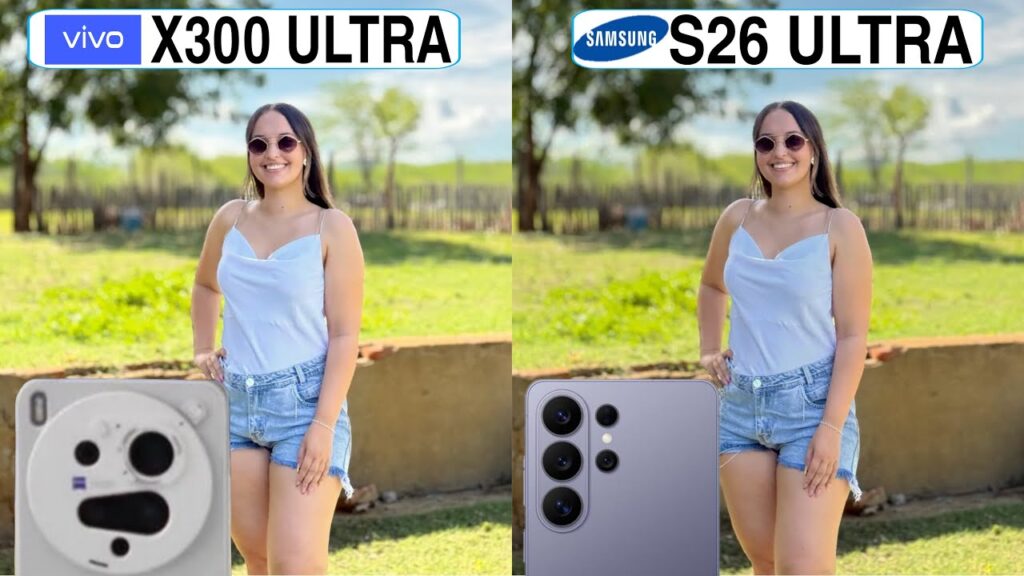
The contest between Vivo X300 Ultra and Samsung Galaxy S26 Ultra is not just about which phone has the sharper specification sheet. It reflects two different ideas of what an ultra-premium flagship should prioritize, with Vivo leaning hard into camera hardware and battery capacity while Samsung focuses on balance, polish, and long-term usability.
That contrast matters most at the top of the market, where buyers are no longer choosing only based on raw numbers. The real question is whether a device should push the hardware limit as far as possible or deliver a more rounded experience for work, entertainment, and everyday use.
Two flagships built around different priorities
Vivo X300 Ultra makes its identity obvious from the start. The large rear camera module, Zeiss branding, and mix of glass and aluminum give it a more experimental look, especially for users who care about photography hardware.
Samsung Galaxy S26 Ultra takes a more restrained route. Gorilla Armor 2, an Armor Aluminum frame, and the presence of S Pen make it feel more mature and practical, especially for daily use and productivity tasks.
Both phones sit in the same premium tier, but they do not aim for the same kind of appeal. Vivo feels aggressive and camera-focused, while Samsung is designed to feel refined and functional.
Display and design target different habits
Vivo X300 Ultra uses a 6.82-inch LTPO AMOLED panel with a 144Hz refresh rate. Dolby Vision, HDR10+, and high PWM dimming support make it especially attractive for gaming and media consumption.
Samsung Galaxy S26 Ultra uses a larger Dynamic LTPO AMOLED 2X panel. Its emphasis is on brightness, anti-reflective treatment, and color balance that remains comfortable outdoors.
In everyday use, Samsung is described as slightly better when harsh light becomes a problem. Vivo, meanwhile, is the more aggressive option for users who want motion to feel smoother and visuals to look more vivid.
Shared chipset, different tuning philosophy
Both devices are powered by the Snapdragon 8 Elite Gen 5 with Adreno 840 graphics. That puts them in the same top-tier class for gaming, multitasking, and AI-related workloads.
Vivo pushes performance more aggressively through speed-oriented tuning. Samsung takes a more balanced approach through One UI 8.5 optimization, while also offering seven major Android upgrades as a key advantage for long-term buyers.
This creates a familiar split. Vivo is tuned to feel fast under heavy use, while Samsung is positioned as the safer choice for people thinking about extended ownership.
Battery is where the gap becomes more obvious
The strongest separation appears in power capacity. Vivo X300 Ultra carries a 6600mAh battery, along with 100W wired charging and 40W wireless charging.
Samsung Galaxy S26 Ultra remains solid with a 5000mAh battery and 60W wired charging. That setup is still competitive, but it looks more conservative next to Vivo’s more ambitious power package.
For heavy users and long gaming sessions, Vivo has the stronger argument. Samsung is still relevant, but its approach is clearly less aggressive in this area.
Camera is Vivo’s sharpest weapon
Vivo X300 Ultra is built around photography. Its 200MP main sensor, large periscope camera, Zeiss optics, and optional external zoom lens make it feel close to a serious imaging device.
The phone also supports Dolby Vision recording and 10-bit video. On the front, its 50MP selfie camera with autofocus can record 4K60, which strengthens its position for content creators.
Samsung Galaxy S26 Ultra stays with a versatile quad-camera setup. Its imaging pipeline and stabilization are known to be dependable, while its color consistency makes it easy to trust in daily shooting.
For the front camera, Samsung uses a 12MP sensor that is aimed more at natural and stable results. Vivo looks more technical and more ambitious, while Samsung remains more balanced and practical.
Price and overall value shape the final decision
Vivo X300 Ultra is priced at around $1500 or around Rp 1.600.000. Samsung Galaxy S26 Ultra sits at around $1300 or nearly Rp 1.400.000.
That gap makes Samsung easier to justify for many buyers. The package is also broader thanks to S Pen, DeX, longer software support, and a stronger ecosystem.
Vivo still has a clear audience, but its value is concentrated around users who want advanced cameras, a larger battery, and fast charging. Samsung offers a wider balance for productivity, entertainment, and long-term everyday use.