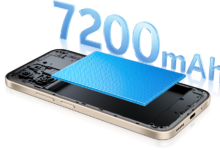
In today’s smartphone world, fast charging technologies have become a key selling point. Brands like Xiaomi, OPPO, and Realme have introduced chargers with power outputs ranging from 200W to over 240W, promising full battery charges in under 10 minutes. But a pressing question remains: how do these ultra-fast chargers compare to more moderate 65W chargers in terms of battery longevity after two years of intensive use?
Battery health over time is a critical consideration for users who want their phones to remain functional and reliable. This article delves into the differences in battery degradation between ultra-fast (200W) and moderate (65W) charging, supported by cycle data, electrochemical studies, and real-world testing. It also offers practical advice on how to balance charging speed with battery preservation.
Battery Degradation Metrics
Smartphone manufacturers typically measure battery lifespan based on 800 full charge-discharge cycles. A battery is considered healthy if it retains at least 80% of its original capacity after reaching this milestone. However, the rate of degradation varies significantly depending on charging speed.
The following table summarizes observed capacity retention after 800 cycles:
| Charging Technology | Remaining Battery Capacity | Battery Health Status |
|---|---|---|
| 65W | Approximately 91% | Very Good |
| 200W–240W | Approximately 80% | Minimum Acceptable Level |
This data shows that phones using 65W chargers maintain far better battery health over two years. In contrast, phones relying on 200W charging start showing signs of battery fatigue, including shorter battery life per charge and performance drops during heavy use.
Real-World Impact of Capacity Differences
While an 11% difference in capacity might sound minimal, it influences daily usage considerably. At 80% battery capacity, users typically experience:
- Screen-on times reduced to 4–5 hours from the initial 6–7 hours.
- Faster battery drain during tasks like gaming or video calls.
- The need to recharge during the day despite intermittent use.
Conversely, with 91% capacity retention, devices tend to deliver:
- Battery life close to the original performance.
- Consistent and stable operation throughout the day.
- Rarely needing emergency top-ups.
For professionals, students, and content creators, this gap could mean the difference between smooth workflow and frequent interruptions due to low battery.
Why Does Fast Charging Accelerate Battery Aging?
Two main physical and chemical factors contribute to the faster deterioration caused by ultra-fast charging:
Excess Heat Generation: Delivering 200W charge involves pushing a very high current into the battery cells in a short period. This process creates significant internal heat, which accelerates chemical degradation within the battery’s anode and cathode. Over time, this heat damages the lithium crystal structure, reducing overall capacity.
- Electrochemical Stress: High current stresses the battery materials, causing harmful effects like lithium plating and microscopic cracks on the electrodes. These physical changes are irreversible and diminish performance and lifespan.
Manufacturers mitigate these risks by incorporating advanced cooling solutions such as vapor chambers, graphite layers, and smart charging algorithms. Nevertheless, these measures only lessen but do not eliminate the long-term negative impacts.
Case Study: OPPO’s 150W Charging vs. Realme’s 240W Charging
Not all fast charging technologies affect batteries equally. Independent tests found OPPO’s SuperVOOC 150W technology maintains battery life better than some 240W implementations by Realme. OPPO devices reached about 1,600 cycles before their capacity dropped to the 80% threshold—double the typical cycle life of 240W fast charging phones.
This superior durability stems from:
- Specialized battery chemistry with dual-cell design and low resistance.
- Adaptive charging algorithms that reduce wattage as the battery nears 80% capacity.
- Advanced thermal management maintaining stable temperatures.
This example highlights that power rating alone doesn’t determine battery aging; implementation quality plays a crucial role.
Should You Avoid Fast Charging?
Fast charging offers undeniable convenience for busy lifestyles and emergency situations. However, careful usage can extend battery lifespan without sacrificing all the benefits. To optimize both speed and health, consider these strategies:
- Prefer charging at 65W or less during overnight or routine charging to minimize heat buildup and degradation.
- Reserve 200W fast charging for emergencies when rapid power top-ups are necessary, such as before an important meeting.
- Enable battery care features like "Optimized Charging" that halt charging at 80% until near wake-up time.
- Avoid charging in hot environments, like inside a parked car or under direct sunlight.
- Regularly update your device’s firmware to benefit from updated battery management improvements.
Balancing Speed and Battery Longevity
Fast charging technologies are beneficial tools tailored to modern needs but require thoughtful usage to maximize device lifespan. Users planning to upgrade their phones every one to two years may favor ultra-fast 200W charging for convenience. Meanwhile, those aiming to extend their phone’s usable lifetime to three or four years will find moderate 65W charging a smarter long-term investment.
Ultimately, the best approach balances immediate charging convenience with sustainable battery health. Applying smart charging habits can help users enjoy the best of both worlds: rapid power recovery without prematurely sacrificing battery durability.