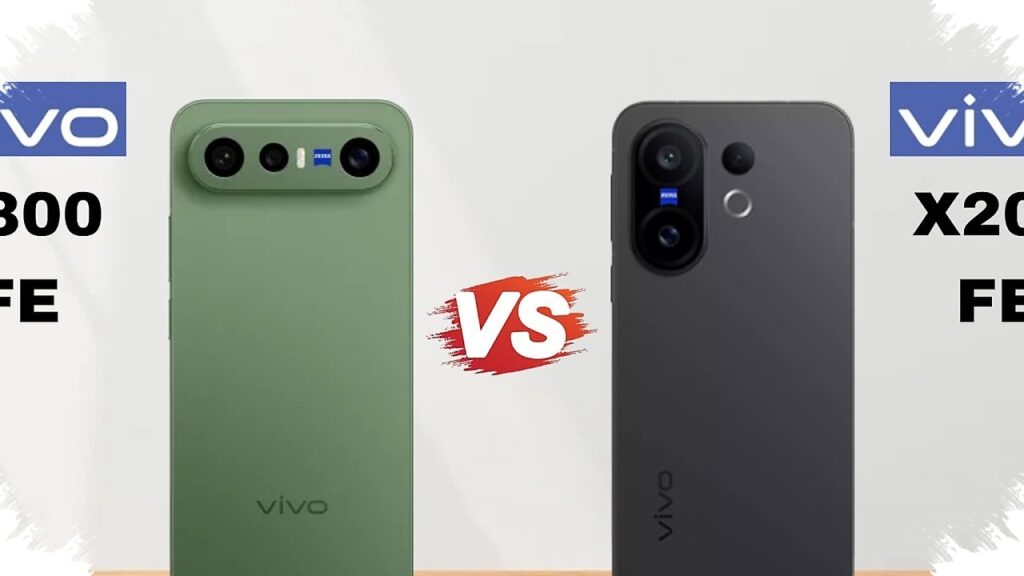
For buyers weighing a compact flagship, the real question is not which Vivo phone is faster on paper, but whether that extra speed is worth paying much more for. Vivo X300 FE enters the comparison as the newer and stronger option, yet Vivo X200 FE still looks highly convincing because the price gap is so wide.
That difference starts at 79,999 Rupees for Vivo X300 FE, while Vivo X200 FE begins at 54,999 Rupees. With both phones targeting users who want a premium experience in a relatively small form factor, the decision depends heavily on how much value is placed on the newer model’s upgrades.
Performance is where the newer model pulls ahead
The clearest separation comes from the chipset. Vivo X300 FE uses Snapdragon 8 Gen 5, while Vivo X200 FE is powered by MediaTek Dimensity 9300+.
Vivo’s newer device is built on a 3nm process and is aimed at stronger gaming, AI tasks, and heavier multitasking. It also pairs the chip with 12GB LPDDR5X Ultra RAM and UFS 4.1 storage, which should help with faster app loading and smoother switching between tasks.
That does not make the older phone weak. Vivo X200 FE still offers up to 16GB LPDDR5X RAM and UFS 3.1 storage, which remains more than enough for gaming, demanding apps, and everyday multitasking.
The display experience stays almost unchanged
There is far less separation on the front. Both phones use a 6.31-inch AMOLED display with 1.5K resolution and a 120Hz refresh rate.
That keeps both models in the same compact flagship category and makes them comfortable for one-handed use. Scrolling, gaming, and video playback should feel similarly premium on either device.
Vivo also says both panels can reach up to 5000 nits of peak brightness. In daily use, that means most users are unlikely to notice a meaningful visual difference between the two.
Cameras look similar for photos, but not for video
On still photography, the two phones are almost matched. Vivo X300 FE and Vivo X200 FE both carry a 50MP + 50MP + 8MP rear camera setup and a 50MP front camera.
Because the camera hardware is so similar, photo output is expected to be close in many situations. That makes the camera section less about a dramatic upgrade and more about consistency across both generations.
Video is where Vivo X300 FE creates a stronger argument. It supports 8K 30fps, 4K 120fps, and 1080p 120fps recording.
Vivo X200 FE, by comparison, is limited to 4K 60fps and 1080p 60fps. For creators or users who care about higher-end recording options, that difference may matter more than the still-camera similarity.
Battery capacity is the same, but efficiency shifts the picture
Both devices come with a 6500mAh battery, which gives each one a solid foundation for long daily use. That capacity should comfortably cover gaming, streaming, and photography across a full day.
Vivo says the newer chipset helps X300 FE run more efficiently under heavy load. In YouTube playback claims, X300 FE is rated for up to 38.4 hours, while X200 FE reaches 25.44 hours.
That gap suggests the newer phone is not only faster, but also more efficient in certain scenarios. For people who use their phones intensively, that may be a practical reason to consider the upgrade.
Price remains the deciding factor
Taken as a whole, Vivo X300 FE offers the stronger chip, faster storage, better video recording options, and improved efficiency. Vivo X200 FE counters with a very similar display, matching photo hardware, a large battery, and a much lower starting price.
That is why the newer model makes the most sense for users who want the latest hardware and stronger technical headroom. For many other buyers, Vivo X200 FE still appears more reasonable because it delivers a flagship-style experience without the much higher cost.
Source: tech.sportskeeda.com