Tunisia’s push to expand renewable energy is running into a political problem as much as an economic one. Five solar concessions approved for foreign multinationals have triggered fears that the country will pay for the infrastructure while private companies capture the profits.
The backlash reflects a deeper dispute over what energy independence should look like. Tunisia’s deficit is large, its import dependence is heavy, and critics say the current strategy does little to build public control, domestic industry, or real sovereignty.
What The Five Concessions Cover
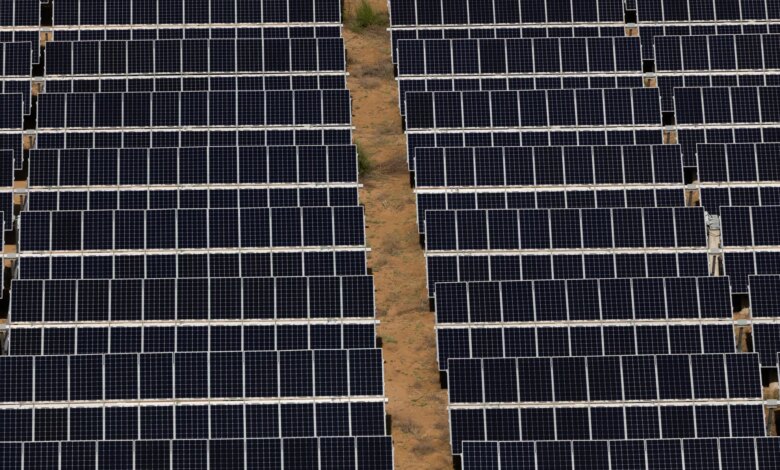
On January 29, five renewable electricity concessions were submitted to the Tunisian parliament for approval. The projects would build solar plants in Khobna and Mezzouna in Sidi Bouzid, El Ksour and Sagdoud in Gafsa, and Menzel Habib in Gabes.
Together, the plants would have a combined capacity of roughly 598 megawatts, with total investment estimated at $560m. According to the concerns raised by unions and observers, the contracts would hand electricity production to foreign companies while reducing STEG, Tunisia’s public utility, to a grid operator.
| Project Detail | Information |
|---|---|
| Number of concessions | 5 |
| Locations | Khobna, Mezzouna, El Ksour, Sagdoud, Menzel Habib |
| Combined capacity | About 598 megawatts |
| Total investment | $560m |
| Likely beneficiaries | Foreign multinationals |
Why Critics Say The Model Is Flawed
The Electricity and Gas Federation argued at an urgent news conference on April 21 that the projects would shift the burden of infrastructure costs onto the public while sending profits abroad. It said the model looked like a repackaged version of the structural adjustment logic of the 1990s, this time framed as a green transition.
The Tunisian Economic Observatory raised additional concerns about tax exemptions, stabilisation clauses, and weak local integration. It also said the contracts offered little technology transfer and limited employment, which reduced their developmental value.
Carbon Credits Became Another Flashpoint
One of the most contentious issues is ownership of carbon credits generated by emissions cuts on Tunisian territory. The observatory reported that the credits could be transferred to the multinationals instead of remaining a public asset.
That concern had already helped drive opposition last year, when the Electricity and Gas Federation held a strike against the transfer of carbon credits to private developers. Despite the protests, the new concessions expanded the mechanism and allowed developers to use the credits to access international subsidy programmes.
The Energy Deficit Behind The Debate
Authorities say the concessions are needed to cut Tunisia’s energy deficit, reduce dependence on Algerian gas, and help meet a target of 35 percent renewables in the energy mix by 2030. But critics argue that the debate is too narrow because it focuses on electricity while ignoring the country’s heavier dependence on petroleum products.
About 73 percent of Tunisia’s energy comes from gasoline and diesel, much of it consumed by a transport sector built around private vehicles. That is why unions and activists argue that the real response should include public transport, restrictions on car imports, progressive taxation on high-consumption vehicles, and greater energy efficiency.
A Missed Chance For Sovereign Cooperation
Regional cooperation is another part of the argument. Tunisia and Libya discussed a joint refinery project in the coastal town of Skhira in 2012, a plan that could have improved energy sovereignty for both countries.
The $2bn project was suspended because conflict in Libya made a stable crude supply impossible, and it was eventually abandoned. The article says this kind of sovereign cooperation ran against broader European interests that benefit from exporting refined petroleum products to the region.
What Supporters Of A Different Transition Want
Opponents of the current model are not rejecting renewables. They are arguing that the transition should be public, democratic, and tied to domestic industrial capacity rather than foreign ownership.
They want public control over energy production and distribution, genuine technology transfer, more investment in industrial development, and regional cooperation that strengthens sovereignty instead of deepening dependency. As www.aljazeera.com notes, the core dispute is not whether Tunisia should transition, but who gets to define the terms.
The country’s energy crisis is real, but critics say privatization will not solve it. Without a different policy path, they warn, Tunisia risks turning a green transition into another channel for external control and private accumulation.