For tablet users who spend time in bright environments, the screen finish can affect comfort as much as the display itself. Under strong daylight or office glare, reflections can quickly trigger tired eyes, blurred vision, and headaches.
That matters even more for older users, whose eyes are often more sensitive to glare and require less strain during long viewing sessions. In the latest comparison as of July 2026, matte panels are described as stronger at reducing reflections, while glossy panels still lead in visual clarity.
Why glare becomes a problem during the day
Working near a café window or in an open outdoor area means a tablet screen is constantly exposed to external light. When that light reflects at the wrong angle, the eyes must work harder just to read text clearly.
Clinical data cited by techno.viva.co.id from eye-health institutions such as the Filutowski Eye Institute points to a rise in computer vision syndrome complaints in mid-2026. The reported symptoms include dry eyes, blurred vision, and headaches, all of which can be intensified by glare.
Matte displays are easier on the eyes
Matte screens use an anti-glare layer designed to scatter reflected light. The result is a surface that feels less like a mirror and stays easier to read in bright daylight.
DisplayNinja Guide 2026 says this coating can significantly reduce mirror-like reflections, while ergonomic research from KTC Insights suggests better long-term visual comfort because the eyes are not constantly fighting hotspots. The trade-off is a slight drop in color sharpness, which can make the screen look a little dimmer or grainier.
Even so, that softer appearance can be an advantage for outdoor use or any setting with strong ambient light. Text remains more stable and readable, which is often the more important factor when the screen is used for extended periods.
Glossy screens still win on visual impact
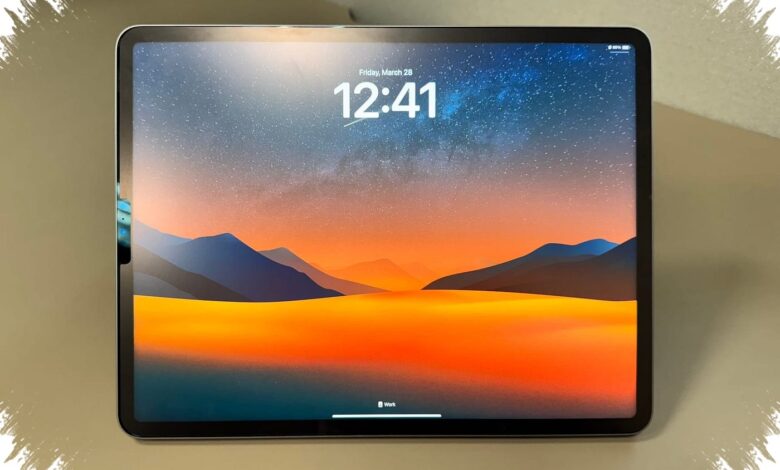
Glossy panels remain attractive because they deliver stronger contrast and more vivid colors. BenQ US Knowledge Center explains that the glass surface lets light pass without filtering, which makes content look crisp and clear.
The downside is the same glass that boosts visual punch also reflects the surrounding environment more easily in direct sunlight. Even premium 2026 tablets with anti-reflective coatings can still struggle when the light angle is not ideal.
That is why glossy screens are better suited to indoor spaces or rooms with controlled lighting. For users who prioritize eye comfort over maximum visual brilliance, they can become less practical during long sessions in bright conditions.
Matte and glossy screens compared for daytime WFC
| Assessment Aspect | Matte Screen (Anti-Glare) | Glossy Screen (High-Gloss) |
|---|---|---|
| Glare reduction | Very high, breaks up reflected light | Low, reflects light easily |
| Eye comfort | High, helps reduce eye strain | Moderate, may trigger focus stress |
| Text visibility in sunlight | Very clear and readable | Hard to read because of mirror effect |
| Color accuracy and contrast | Slightly muted | Very accurate and vivid |
| Best location | Outdoor or bright open areas | Indoor or low-glare rooms |
For older users, the key issue is not only how sharp the screen looks, but how much effort the eyes must spend adapting to reflections. In that respect, matte finishes offer a practical advantage because they keep text readable without constant glare interference.
Glossy screens still make sense for users who mostly stay indoors and want the most vivid presentation possible. But when mobility is high and bright light is difficult to avoid, matte remains the more sensible choice for protecting eye comfort.